
VietPOS Rack 1500 pallet: Storage density increases 300% after 6 months
Case study of deploying VietPOS shuttle rack at a food and beverage factory: from a traditional 2000m² warehouse to a storage density of 1500 pallets, 18-month ROI, and 5 lessons applicable to other FMCG businesses.
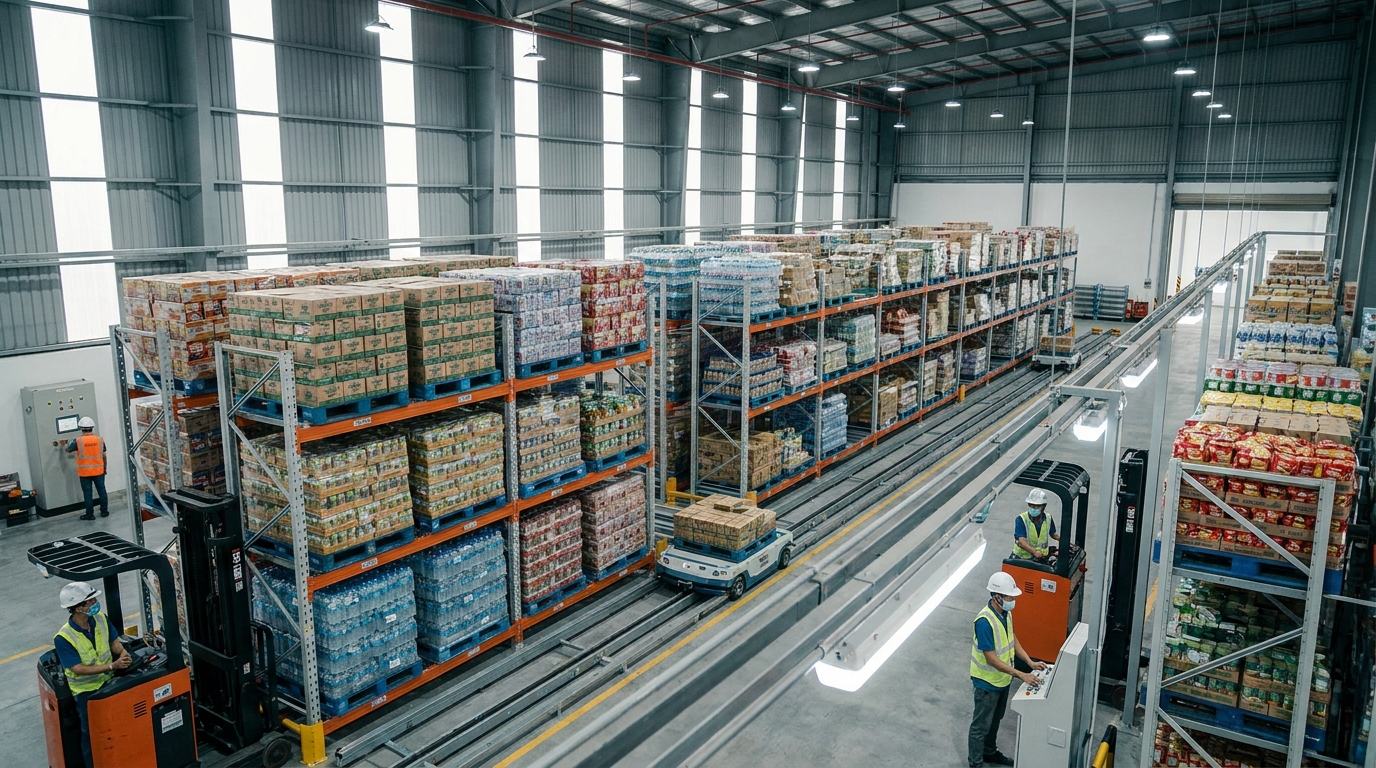
Shuttle rack (automated warehouse cart system) is a deep storage solution designed for high-density FMCG warehouses. In Vietnam, this technology is being widely deployed in food, beverage, and logistics facilities to optimize warehouse space and increase picking efficiency. The VietPOS Rack 1500 pallet case study at a leading factory reveals specific figures on density, ROI, and mistakes to avoid.
Customer: Tan Phat Food Production Joint Stock Company | Industry: Food & Beverage | Scale: 150 employees, 5 distribution branches | Location: Binh Duong Industrial Park, Vietnam | Implementation Time: Q2 2023 – Q4 2023
Customer Problems
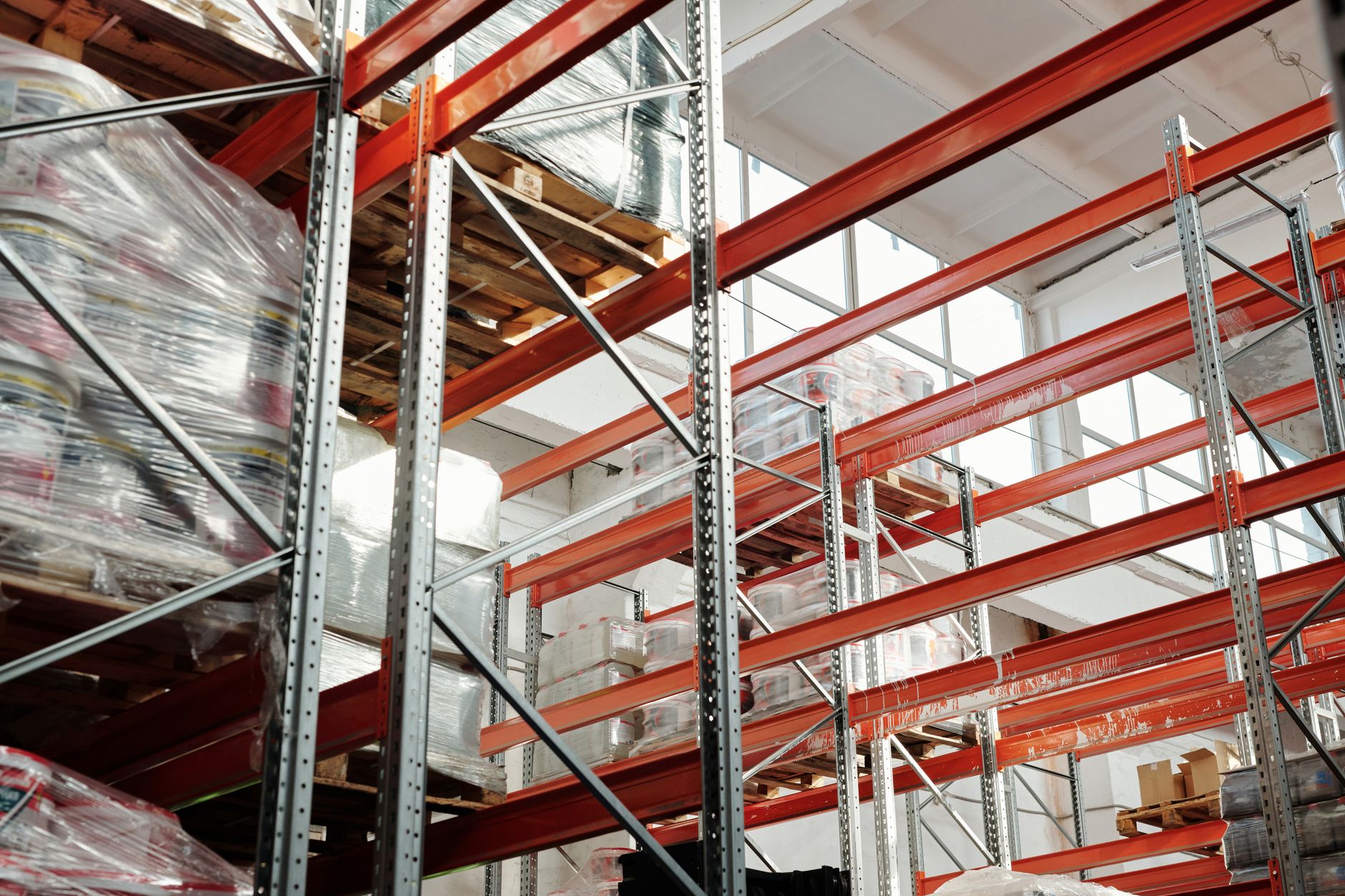
Tan Phat was using a traditional warehouse with standard selective racking, occupying an area of 2000m². However, after 3 years of operation, the company faced 4 main challenges affecting performance and costs.
- Low storage density: Only 400 pallets in 2000m², equivalent to 0.2 pallets/m². To expand, the company had to rent additional external warehouse space at a cost of 150 million VND/year.
- Long picking time: Average 12-15 minutes/order because forklifts had to go deep into pallet rows, causing congestion during peak hours.
- High labor costs: Required 8-10 forklift drivers per morning shift, total salary + insurance cost of 280 million VND/year.
- Low safety: Average 2-3 minor accidents/month (pallet collisions, falling goods), causing downtime and affecting product quality.
Shuttle rack solution deployed by VietPOS
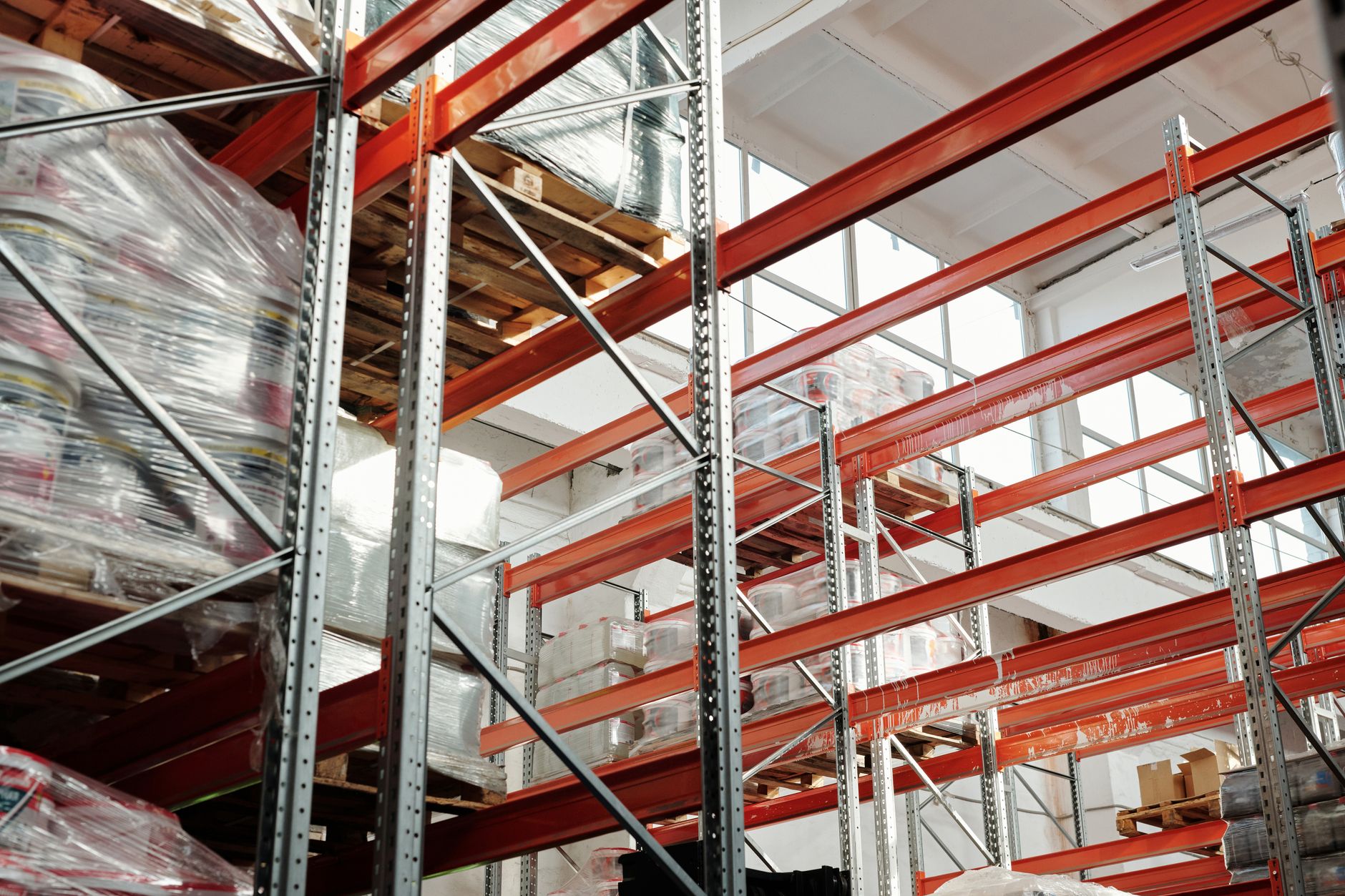
VietPOS Rack proposes replacing 60% of the traditional warehouse area with a 1500-pallet shuttle rack system. The deployment process is divided into 5 main phases, from survey to operational training, lasting 6 months.
- Survey & Design (May 2023): VietPOS sends an engineering team to the Tan Phat warehouse to analyze goods flow, pallet dimensions, and seasonal picking frequency. Based on the data, they design a 3-level, 12-aisle shuttle rack layout, with 50 pallets per aisle depth.
- Rack Structure Installation (June-July 2023): The VietPOS installation team installs 1500 pallet racking capacity, the electric rail system for shuttle carts, and the control infrastructure. The installation takes 8 weeks without disrupting current warehouse operations (using temporary storage).
- Shuttle Cart System & WCS Installation (August 2023): Install 6 automated shuttle carts (each carrying 1 pallet, speed 1.2 m/s), connected to the Warehouse Control System (WCS) via an API interface. The WCS optimizes picking routes automatically.
- Testing & Fine-tuning (September 2023): Run a 2-week trial at 50% capacity, check pallet positioning accuracy, picking speed, and recalculate WCS parameters for optimization.
- Training & Handover (October 2023): VietPOS trains 12 warehouse staff + 2 maintenance engineers on system operation, troubleshooting, and periodic maintenance.
Notably, VietPOS integrates the shuttle rack system with Tan Phat’s warehouse management ERP, enabling full automation of the process from receiving → storage → picking → shipping.
Results achieved after 6 months of operation

After 6 months of stable operation (from October 2023 to March 2024), Tân Phát recorded significant improvements in density, performance, and costs.
| Indicator | Before (Traditional Warehouse) | After (Shuttle Rack) | Improvement |
|---|---|---|---|
| Storage density | 400 pallets / 2000m² (0.2 pallets/m²) | 1500 pallets / 1200m² (1.25 pallets/m²) | +625% (6.25 times increase) |
| Order picking time | 12-15 minutes/order | 4-5 minutes/order | -68% (saves 8-10 minutes) |
| Labor cost | 280 million VND/year (8-10 drivers) | 120 million VND/year (2-3 drivers + 2 engineers) | -57% (saves 160 million VND) |
| Workplace accidents | 2-3 incidents/month | 0 incidents/6 months | -100% (absolute safety) |
| ROI (Payback) | – | 18 months (calculated from initial deployment) | Investment capital ~2.8 billion VND |
“Before, we were about to rent additional external warehouse space at a cost of 150 million VND/year. But after deploying the VietPOS shuttle rack, the current 1200m² warehouse is now enough to hold 1500 pallets instead of 400. Not only that, order picking time decreased from 15 minutes to 5 minutes, allowing us to process an additional 25-30% of orders without hiring more staff. This is the best investment decision the company has made in the past 3 years.”
— Mr. Nguyễn Văn Tuấn, Operations Director, Tân Phát Food Production Joint Stock Company
Comparing Shuttle Rack vs Drive-In Rack for FMCG
When deciding to upgrade the warehouse, Tan Phat compared two solutions: shuttle rack (automated shuttle) and drive-in rack (forklift drives into the rack). Both increase density, but differ in performance, cost, and application.
| Criteria | Shuttle Rack (VietPOS) | Drive-In Rack |
|---|---|---|
| Storage Density | 1.0-1.5 pallets/m² (best) | 0.7-1.0 pallets/m² |
| Picking Speed | 4-6 minutes/order (fastest) | 8-12 minutes/order |
| Initial Investment | 2.5-3.0 billion VND (higher) | 1.5-2.0 billion VND (lower) |
| Annual Operating Cost | 120 million VND (low — automated) | 200 million VND (high — requires drivers) |
| Safety Level | Absolute (driverless) | High (but still has risks) |
| Suitable For | FMCG, pharma, high-volume | Small-medium warehouses, high FIFO requirement |
Tan Phat chose the shuttle rack because: (1) Highest density, (2) Fastest speed suitable for peak orders, (3) Automation reduces long-term labor, (4) Absolute safety with no accidents.
5 lessons applicable to other FMCG businesses
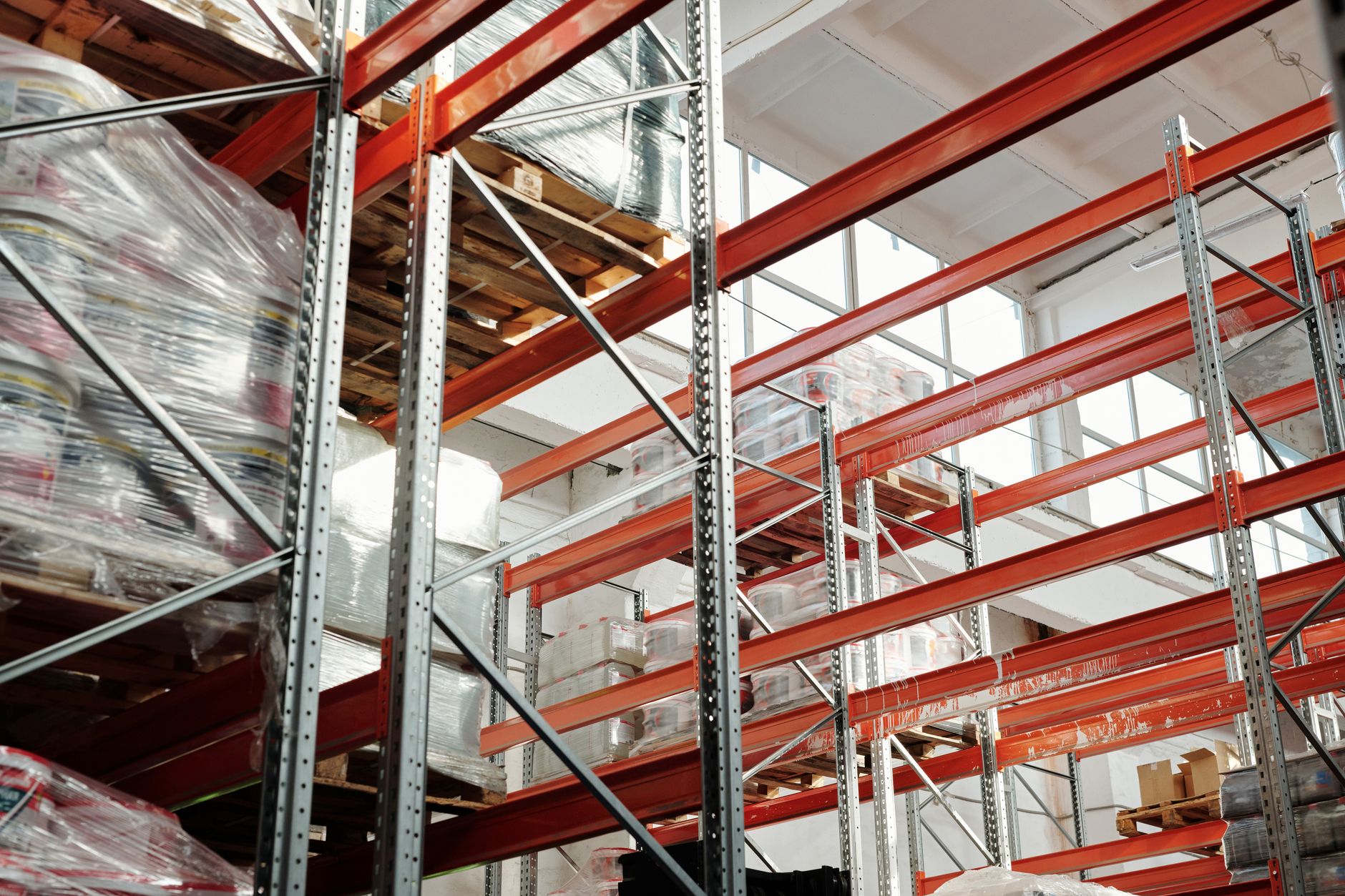
From the Tân Phát case study, VietPOS draws 5 practical lessons to help other FMCG businesses avoid mistakes and optimize shuttle rack deployment.
- Thoroughly survey goods flow before designing: Tân Phát initially wanted to install 20 shuttle lanes (60 pallets each). However, VietPOS discovered that 40% of goods were slow-moving essentials (long-term storage), and 60% were fast-moving goods (actual FMCG). Therefore, the design used 12 shuttle lanes + 1 traditional pallet racking area for slow-moving goods. Result: reduced costs by 300 million VND compared to the initial design.
- Integrate WCS with ERP from the start, not as a retrofit later: If Tân Phát had installed the shuttle rack separately without connecting to the ERP, they would have had to manually enter goods into the WCS, requiring 2 additional staff. VietPOS integrated from August, enabling 100% process automation.
- Train internal maintenance engineers, don’t rely on the supplier: Tân Phát invested in training 2 internal engineers on shuttle rack maintenance. The training cost was 50 million VND, but it saved 200 million VND/year compared to signing a maintenance contract with the supplier.
- Phase the deployment, don’t implement everything at once: Instead of replacing 100% of the warehouse at once (high risk of operational disruption), Tân Phát replaced 60% over 6 months, retaining 40% of the traditional warehouse as a buffer. This reduced risk and allowed for design adjustments during deployment.
- Set clear KPIs from the start, measure ROI monthly: Tân Phát set targets: density of 1500 pallets, retrieval time <6 minutes, ROI in 18 months. Each month, the company compared actual results vs. the plan, making timely adjustments. Result: achieved the density target in December, achieved the time target in February.
Challenges in Shuttle Rack Deployment
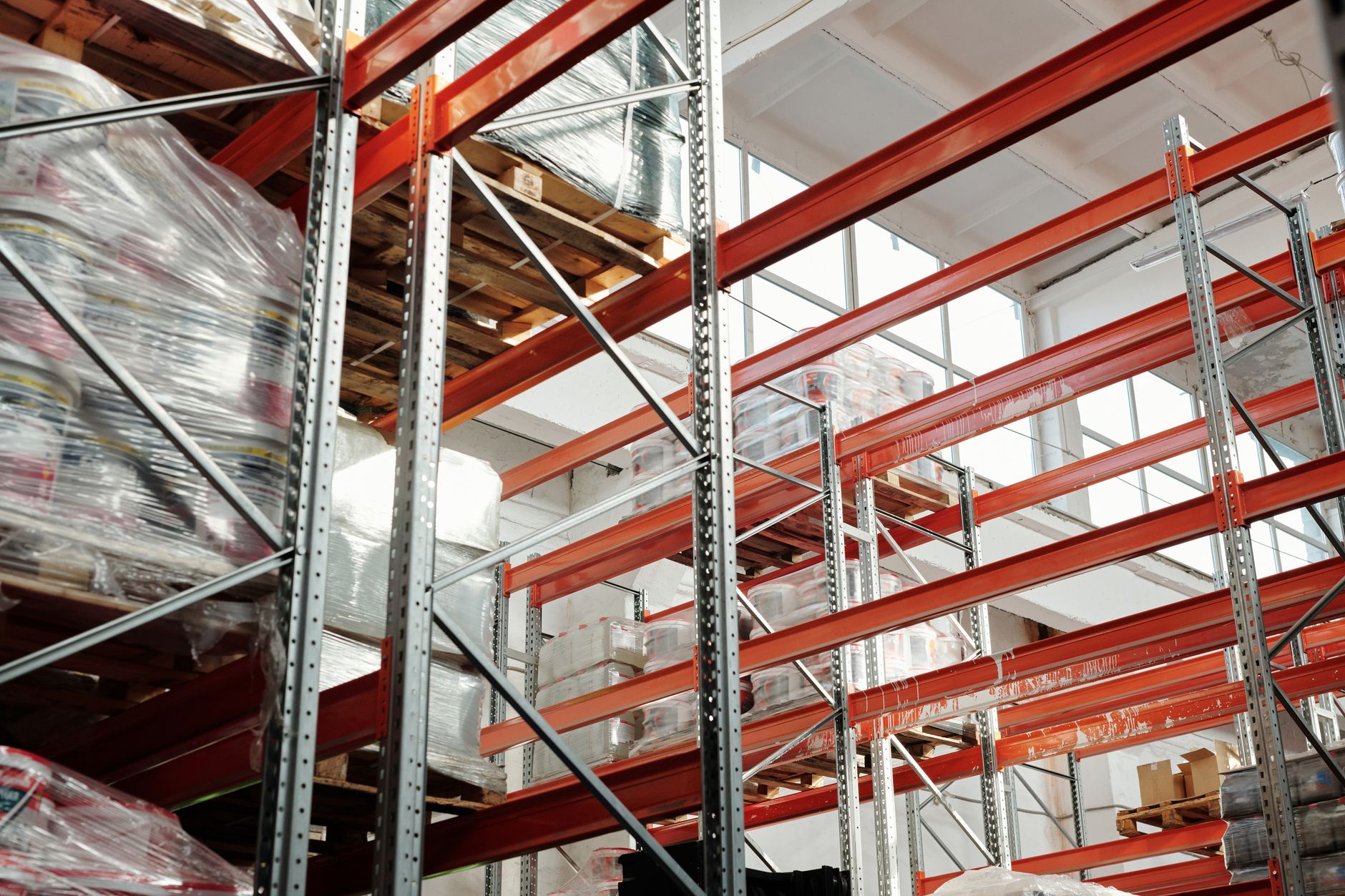
Although the final result was successful, Tan Phat encountered several challenges that other businesses deploying shuttle rack FMCG should note.
- Challenge 1 — Changing operational processes: Warehouse staff were accustomed to manual picking using forklifts. Switching to shuttle rack, they had to learn how to use the WCS interface, scan barcodes accurately, and handle automated faults. It took Tan Phat 3 weeks for staff to adapt, not the expected 1 week.
- Challenge 2 — Pallet placement accuracy: Shuttle rack requires pallets to be placed in precise positions (deviation <5cm), otherwise the shuttle cannot retrieve them. Tan Phat had to improve the inbound process, adding checkpoints to inspect pallets before placing them into the rack.
- Challenge 3 — Shuttle maintenance: The shuttle is a complex electro-mechanical device requiring periodic maintenance every 500 operating hours. Otherwise, the error rate increases to 15-20%. Tan Phat had to establish a strict maintenance schedule and stock spare parts.
Frequently Asked Questions
Is the 1500-pallet shuttle rack suitable for small warehouses under 1000m²?
No. Shuttle rack requires a minimum area of 800-1000m² for effective deployment (at least 12 lanes, each 6 levels high). If the warehouse is smaller than 800m², consider drive-in rack or mobile racking instead of shuttle rack. VietPOS will conduct a free survey and recommend the most suitable solution.
Is the 18-month ROI a general figure or specific to Tan Phat?
The 18-month ROI is an average figure for FMCG businesses with 150-300 employees and a warehouse area of 1500-2500m². Smaller businesses (warehouse <1000m²) may have an ROI of 24-30 months because fixed capital investment does not scale down proportionally. Larger businesses (warehouse >3000m²) may achieve an ROI of 12-15 months due to higher labor cost savings.
Does shuttle rack require special warehouse conditions (temperature, humidity)?
Yes. Shuttle rack operates best at temperatures of 5-35°C and humidity of 20-80%. In cold storage (0-5°C) or hot conditions (>35°C), shuttle battery performance decreases by 10-15%. If the warehouse is too humid (>85%), the optical sensors on the shuttle may experience interference. Tan Phat uses a normal warehouse (20-28°C), so they did not encounter this issue.
Does the 2.8 billion VND investment include WCS + ERP integration, or just the rack + shuttle?
The 2.8 billion VND investment includes: (1) Shuttle rack with 1500 pallet capacity (~1.2 billion), (2) 6 automated shuttle vehicles (~800 million), (3) Rail system + controls (~600 million), (4) Installation + WCS setup (~200 million). ERP integration (if not already available) is separate, costing approximately 300-500 million. Tan Phat already had an old ERP, so they only needed custom integration (~50 million).
After deploying shuttle rack, how many additional orders can Tan Phat handle without hiring more staff?
Based on Tan Phat’s data, the shuttle rack increases throughput by 25-30% with the same number of employees. If previously handling 200 orders/day with 8 drivers, afterward it handles 250-260 orders/day with only 2-3 drivers (the rest is automation). However, this figure depends on order complexity, number of SKUs, and shuttle rack configuration.
Conclusion: When should an FMCG business deploy a shuttle rack?
The Tan Phat case study shows that the shuttle rack is a viable solution for FMCG businesses when: (1) The warehouse reaches 1000m² or more, (2) Stores >500 pallets/day, (3) Requires picking speed <10 minutes, (4) Labor costs are high (>200 million VND/year). If a business meets 3-4 of these criteria, ROI will be achieved in 18-24 months. VietPOS Rack provides free survey services, specific ROI calculations, and phased deployment to reduce risk.
Register for a VietPOS shuttle rack demo or free warehouse survey: Contact 0935 295 337 (VIET DUC TRI GROUP) for consultation on smart warehouse solutions suitable for your business.