
Cable tray installation: Process & common mistakes
Installation guide for industrial cable trays and ladders from the factory experience of Việt Easy in Long An. Avoid 5 common mistakes, TCVN standards, and a specific 6-step process to help M&E contractors reduce incidental costs by 15-25% and complete projects on schedule.
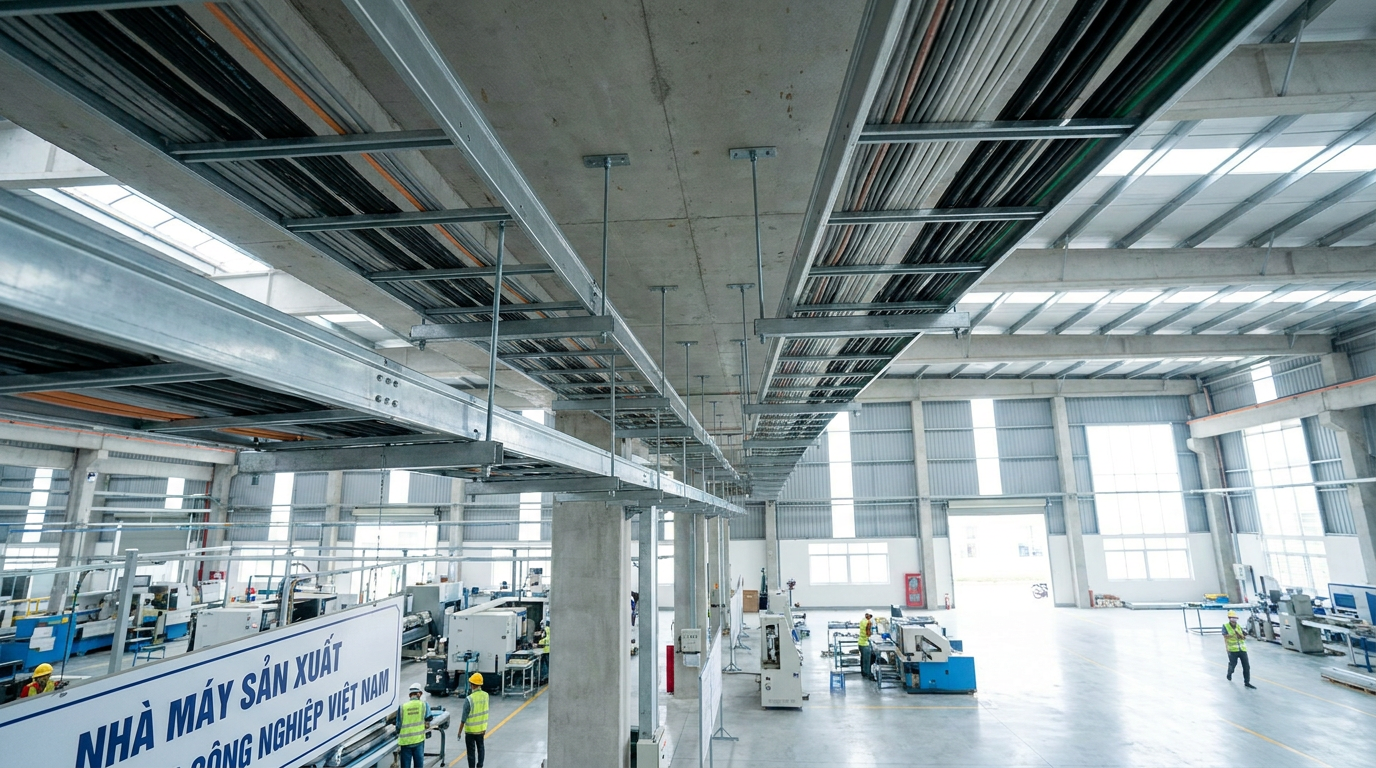
Installing cable trays is a crucial step in industrial electrical systems — determining safety, cable lifespan, and long-term maintenance costs. In Vietnam, many M&E contractors and industrial park project management boards still encounter construction errors, leading to cost overruns of 15-25%, and even affecting the electrical safety of the entire plant. Việt Easy — a specialized industrial infrastructure installation unit of Việt Đức Trí Group — has accumulated practical experience through over 50 cable tray installation projects in large-scale factories. This article shares a specific 6-step process, TCVN standards, and 5 “critical” mistakes contractors must avoid.
Why is technically correct cable tray installation important?
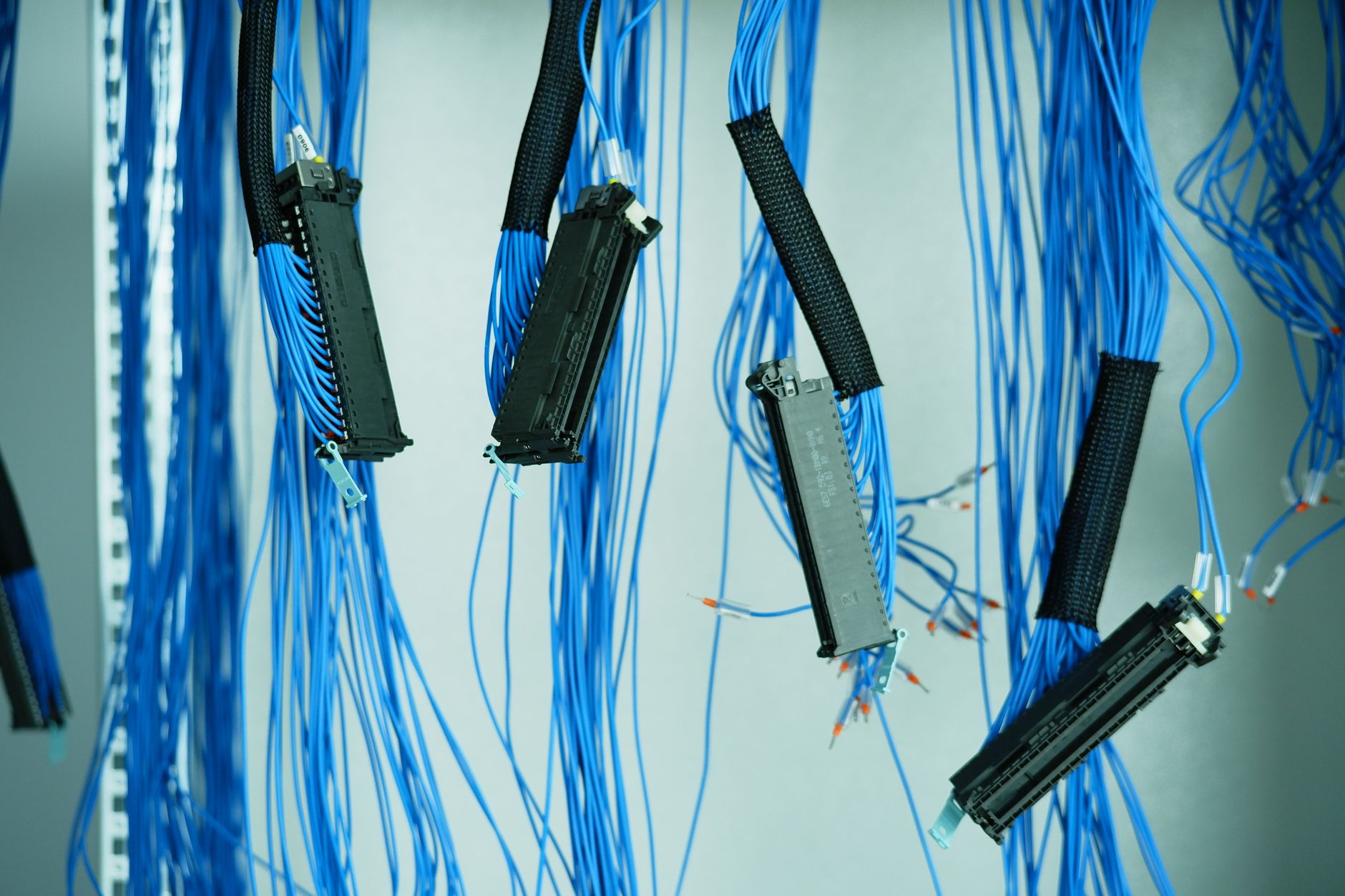
A cable tray is not just a tool for organizing cables — it is the electrical infrastructure foundation of the entire building. Non-standard installation leads to three main problems: (1) Cables suffer from temperature overload due to insufficient ventilation gaps, causing fire hazards; (2) Incorrect grounding connections render electrical safety protection ineffective; (3) Cost overruns due to the need for reinstallation, impacting project schedules. According to TCVN 9208:2012, every detail from hanger spacing, slope, to equipotential bonding methods is clearly specified.
5 Common Mistakes in Cable Tray Installation

⚠ Mistake 1: Excessive hanger spacing — Many contractors use a spacing of 2.5-3m to save costs, but TCVN standards specify a maximum of 1.5-2m. Result: the cable tray sags, cables are not uniformly supported, and are prone to damage.
⚠ Mistake 2: No equipotential bonding at every joint — Forgetting or omitting grounding at connection points between cable tray sections. This renders electrical safety protection ineffective, increasing the risk of short circuits and fires.
⚠ Mistake 3: Using inappropriate bolts — Using M6 bolts instead of M8-M12 as per standards, or not using expansion bolts. The cable tray becomes unstable and prone to loosening over time.
⚠ Mistake 4: Installation not following construction drawings — Changing positions, slopes, or omitting design details without coordinating with the design engineer. This causes conflicts with other systems (HVAC, plumbing, structure).
⚠ Mistake 5: Not checking material durability — Using substandard or corroded steel materials. This leads to reduced cable tray lifespan, requiring replacement sooner than expected.
6-Step Cable Tray and Ladder Installation Process According to TCVN Standard

- Step 1: Review construction drawings & prepare materials — Confirm location, slope, type of cable tray/ladder (ladder / perforated / solid), and cross-section dimensions. Check material quality certificates, ensuring materials meet IEC 61537 or JIS 0303 standards. Create a list of M8-M12 bolts, zinc grounding straps, and grounding wire (6mm²).
- Step 2: Install support brackets — Fix support brackets onto walls/columns using expansion bolts or powder-actuated fasteners, with a horizontal spacing of 1.5-2m. Ensure bracket height matches the drawing (typically 30-50cm from ceiling or wall). Check alignment using a laser level or spirit level.
- Step 3: Install cable trays/ladders & connect joints — Place cable trays/ladders onto the support brackets, use M8-M12 bolts with expansion bolts to connect the tray/ladder sections together. The connection gap must not exceed 5cm. Check stability by gently pulling.
- Step 4: Equipotential bonding (grounding) — Connect a 6mm² ground wire from each cable tray/ladder joint to the main earthing panel. Use zinc grounding straps to isolate connection points, preventing corrosion. Measure grounding resistance; it must be ≤ 0.1Ω according to TCVN.
- Step 5: Pull cables into the cable tray/ladder — Use specialized cable pulling tools (cable puller), avoid pulling cables by hand. Arrange cables in layers, ensuring minimum spacing between cables (typically 2-5cm depending on cable type). Label cables every 5 meters.
- Step 6: Acceptance & final inspection — Check alignment, stability, grounding resistance, and verify against the completed construction drawing. Prepare an acceptance report, recording all measured details. Take documentary photos.
TCVN 9208:2012 Standard — Key Points to Remember
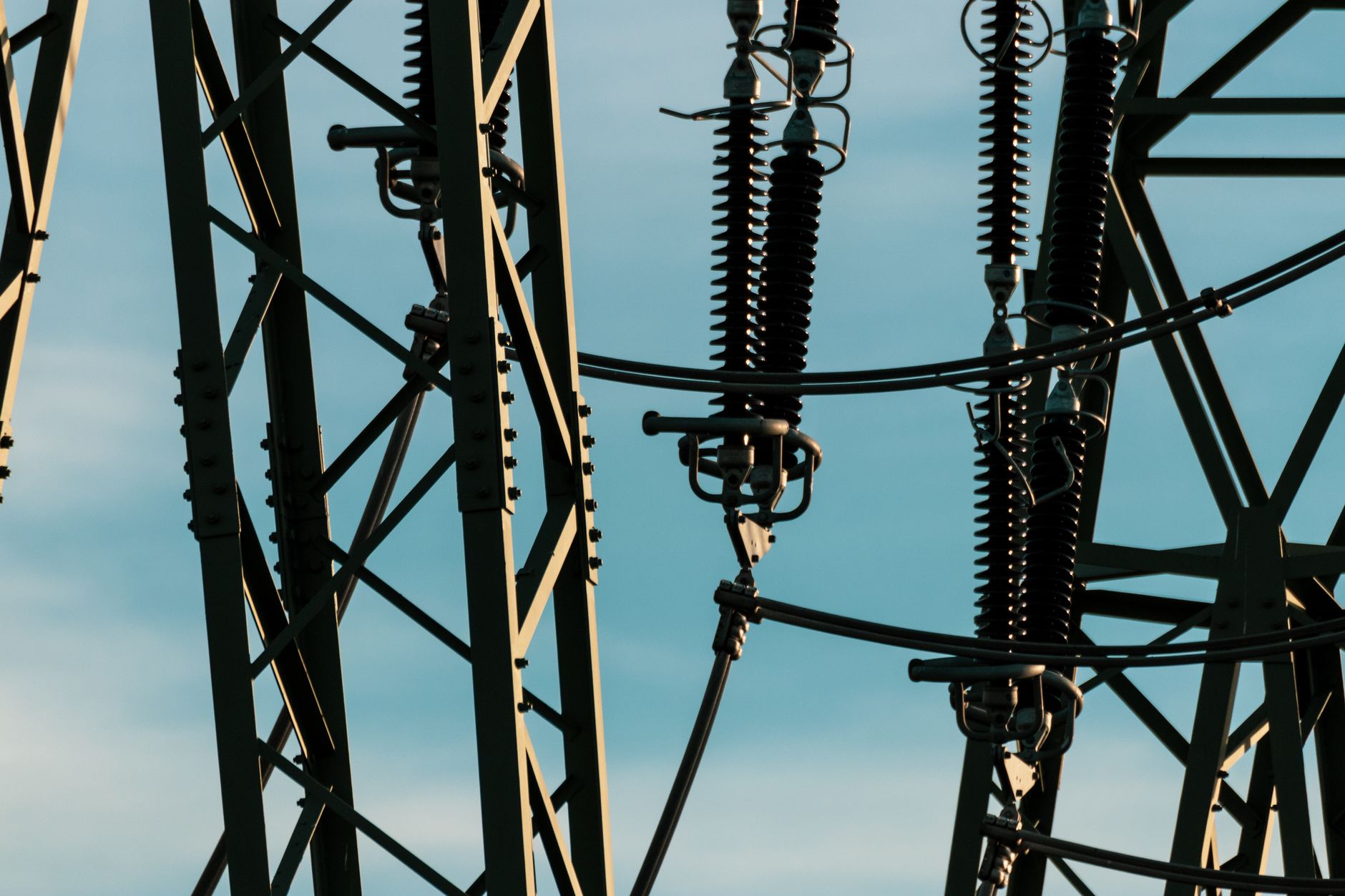
TCVN 9208:2012 standard “Cable trays and ladders for electrical installations — Technical requirements” is a mandatory standard in Vietnam. Key points: (1) Horizontal support bracket spacing 1.5-2m, vertical spacing 2-2.5m; (2) Minimum slope of 1-2% for water drainage; (3) Minimum bending radius according to cable type (typically 3-5 times cable diameter); (4) Equipotential bonding at every joint, resistance ≤0.1Ω; (5) Steel material must have a galvanized or powder-coated layer for corrosion protection. Việt Easy always uses cable trays/ladders meeting IEC 61537 or JIS 0303 to ensure compliance with international standards.
Application of cable tray installation at Long An factory
The Long An factory project (2023-2024) is a typical example of Việt Easy in large-scale industrial electrical infrastructure installation. The factory has an area of 15,000m², a 3-phase 380V electrical system with a total cable tray length of over 2,500m, divided into 5 areas (production area, cold storage, office, auxiliary plant, generator room). The installation must comply with TCVN 9208:2012 and IEC 60364 electrical safety standards. The initial M&E contractor made mistakes: using a hanger spacing of 2.5m, forgetting to ground 30% of the joints, and using non-standard M6 bolts. Việt Easy intervened, reworked 40% of the work, used hanger spacing of 1.5-2m, grounded 100% of the joints, and used IEC-standard M10 bolts. Result: saved 18% in additional costs, completed on schedule, and no electrical safety incidents in the first 12 months of operation.
Other applications of industrial cable trays
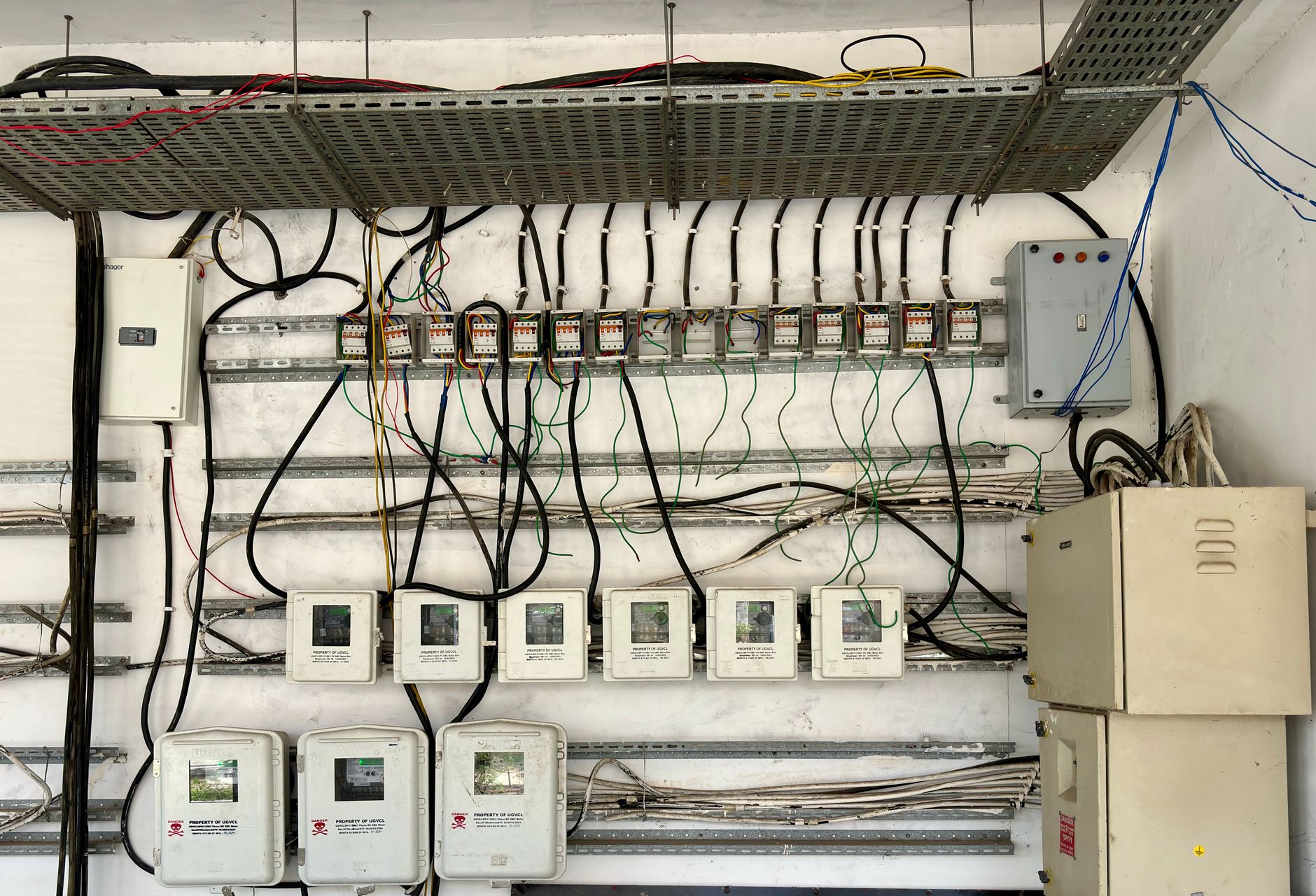
Cable trays are not only used in manufacturing factories but also widely applied in other fields: (1) Office buildings & Shopping malls — Installing cable trays from the main electrical panel to the floors, supplying power to lighting, air conditioning, and server systems; (2) Food processing factories — Corrosion-resistant cable trays (stainless steel) are installed in humid, high-temperature environments; (3) Substations & power plants — Installing cable trays to organize high-voltage cables, control cables, and signal cables; (4) Cold storage & refrigeration plants — Using galvanized cable trays to resist corrosion from cold, humid environments. Each application has specific requirements regarding materials, spacing, and grounding methods.
Choosing the Right Type of Cable Tray
The market offers 3 main types of cable trays: (1) Ladder — Structure with 2 side rails + rungs, suitable for high-voltage cables, good ventilation, cheapest; (2) Perforated — Steel sheet with holes, reduces weight, suitable for large cables, moderate ventilation; (3) Solid — Solid steel sheet, best cable protection, suitable for dirty environments, poor ventilation. Việt Easy provides IEC 61537 cable trays from reputable manufacturers, with competitive pricing and a 5-year warranty. Choosing the right cable tray type depends on the cable type, installation environment, and project protection requirements.
Need consultation on industrial cable tray installation for your project?
Việt Easy — a member of Việt Đức Trí Group — provides comprehensive consulting, design, material supply, and installation services for cable trays, complying with TCVN 9208:2012 and international standards. We have completed over 50 projects at large-scale factories nationwide, helping customers reduce incidental costs by 15-25% and ensuring 100% electrical safety.
Contact Việt Easy now: 0935 295 337 | Email: [email protected]
Related Articles
Learn more about industrial infrastructure and M&E solutions from Việt Đức Trí Group:
- VietPOS Rack launches 2026 catalogue — 12 new industrial racking lines
- VietPOS Rack completes selective racking for logistics center in Binh Duong
- Tay Ninh Factory — 8 years of Group’s self-sufficient internal production capacity
- Việt Easy completes 200 sets of customized furniture for office building in District 1, HCMC
- An Ninh Số launches AI behavior analysis camera for mini supermarket chains
Frequently Asked Questions (FAQ)
Below are common questions from M&E engineers, contractors, and project management boards when implementing cable tray installation projects.
What is the cost of industrial cable tray installation?
The cost of cable tray installation depends on many factors: (1) Type of cable tray (ladder / perforated / solid); (2) Material (galvanized steel / stainless steel); (3) Length & complexity (number of joints, bends); (4) Installation location (Hanoi / HCMC / provinces). According to Việt Easy’s experience, the cost of materials + labor for installing IEC 61537 ladder cable trays is approximately 120,000-180,000 VND/meter (excluding VAT). For an accurate quote, please contact 0935 295 337.
How long does cable tray installation take?
Installation time depends on the cable tray length, project complexity, and number of workers. On average, 1 installation team (4-5 people) can complete 20-30 meters of cable tray per day (including installing supports, cable trays, grounding, inspection). The Long An factory project (2,500m of cable tray) took 3.5 months with 3 parallel installation teams. Việt Easy provides a detailed construction schedule to ensure no impact on other work stages.
How to check the installation quality of cable trays?
Inspecting the installation quality of cable trays according to TCVN 9208:2012 standard includes: (1) Checking straightness with a laser level or spirit level; (2) Checking the distance between supports (1.5-2m); (3) Measuring grounding resistance (must be ≤ 0.1Ω); (4) Checking bolts are secure (not loose); (5) Checking for material corrosion; (6) Checking as-built drawings. Việt Easy prepares detailed acceptance records for each project, accompanied by documentation photos and measurement data.
Can imported cable trays be used instead of domestically produced ones?
Yes, but compliance with IEC 61537 or JIS 0303 standards is required. Imported cable trays (from China, Thailand, India) are often 10-20% cheaper than domestic products, but quality is inconsistent. Việt Easy recommends using cable trays with international quality certifications (ISO 9001, CE), and inspecting materials before installation. Domestically produced cable trays (from factories in Hanoi, HCMC) are usually more expensive but offer stable quality and better warranties.
Is grounding really necessary for cable trays?
Yes, grounding is mandatory according to TCVN 9208:2012 and IEC 60364 standards. Grounding helps: (1) Create a safe path for leakage current, preventing short circuits and fires; (2) Protect workers from electric shock; (3) Protect electrical equipment from damage. Grounding resistance must be ≤ 0.1Ω per standard. Without grounding or with incorrect grounding, the cable tray becomes a dangerous “electrical trap”. Việt Easy never skips the grounding step, even if it increases costs by 5-8%.
What is the lifespan of cable trays and how should they be maintained?
The lifespan of cable trays depends on the material, installation environment, and maintenance. Galvanized steel cable trays typically last 15-20 years in normal environments, 10-12 years in humid environments (cold storage, processing plants). Periodic maintenance: (1) Check every 6 months: inspect bolts, check for corrosion, inspect cables; (2) Clean dust annually; (3) Check grounding resistance yearly. Việt Easy offers periodic maintenance packages costing 5-10% of the installation value per year.
How to choose between ladder, perforated, and solid cable trays?
Choosing the type of cable tray depends on: (1) Ladder — Suitable for high-voltage cables (≥10kV), good ventilation, cheapest, but does not protect cables from dust; (2) Perforated — Intermediate between ladder and solid, reduces weight, suitable for medium cables (1-10kV), average cost; (3) Solid — Best cable protection, suitable for dirty environments (processing plants, cold storage), but heavier, highest cost. Việt Easy offers free consultation to select the appropriate cable tray type for your project.