
ERP integrated POS: Comprehensive solution for Vietnamese SMEs 2026
ERP integrated with POS is a unified management platform that connects point-of-sale transactions with the business operations center. This article explains the operating mechanism, why Vietnamese SMEs need to transition from fragmented systems to an integrated platform, and the specific benefits of implementation in 2026.
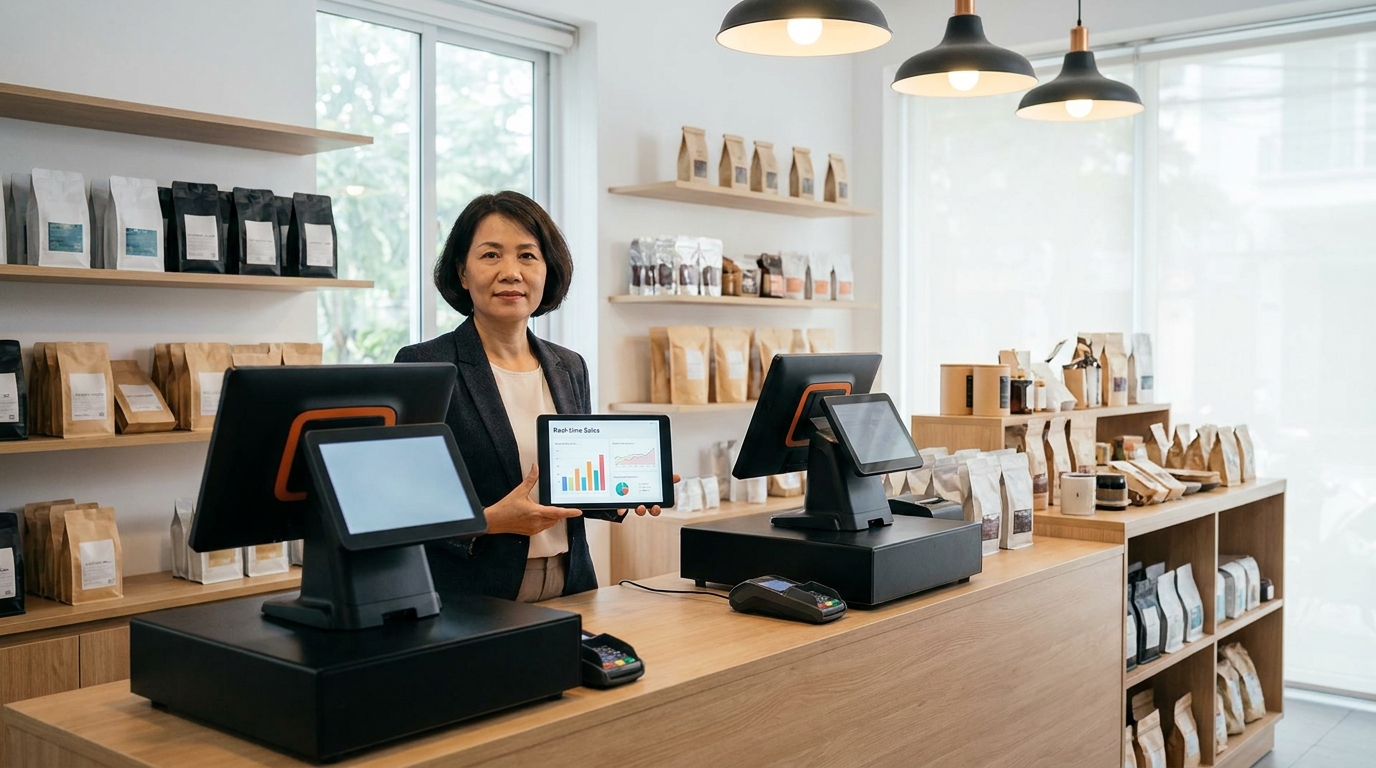
ERP integrated with POS is a unified management platform that connects point-of-sale (POS) systems with the enterprise operations center. Instead of fragmented systems recording data sporadically, ERP integrated with POS synchronizes sales, inventory, accounting, and human resources in real-time. In Vietnam, this model is becoming the standard for F&B chains, retail, and service businesses with 5-50 branches aiming for sustainable expansion.
What is ERP integrated with POS?

ERP integrated with POS is a comprehensive enterprise management system where the Point of Sale (POS) module is deeply integrated into the common ERP platform. Instead of POS being standalone software that records data in separate files, POS is directly connected via API or a centralized database, allowing sales, inventory, customer, and financial data to be automatically updated in the ERP without manual data entry.
Definition: ERP integrated with POS = A comprehensive enterprise management system with a point-of-sale module directly connected to a centralized database, synchronizing sales, inventory, accounting, and human resources data in real-time without manual intervention.
How does ERP integrated with POS work?
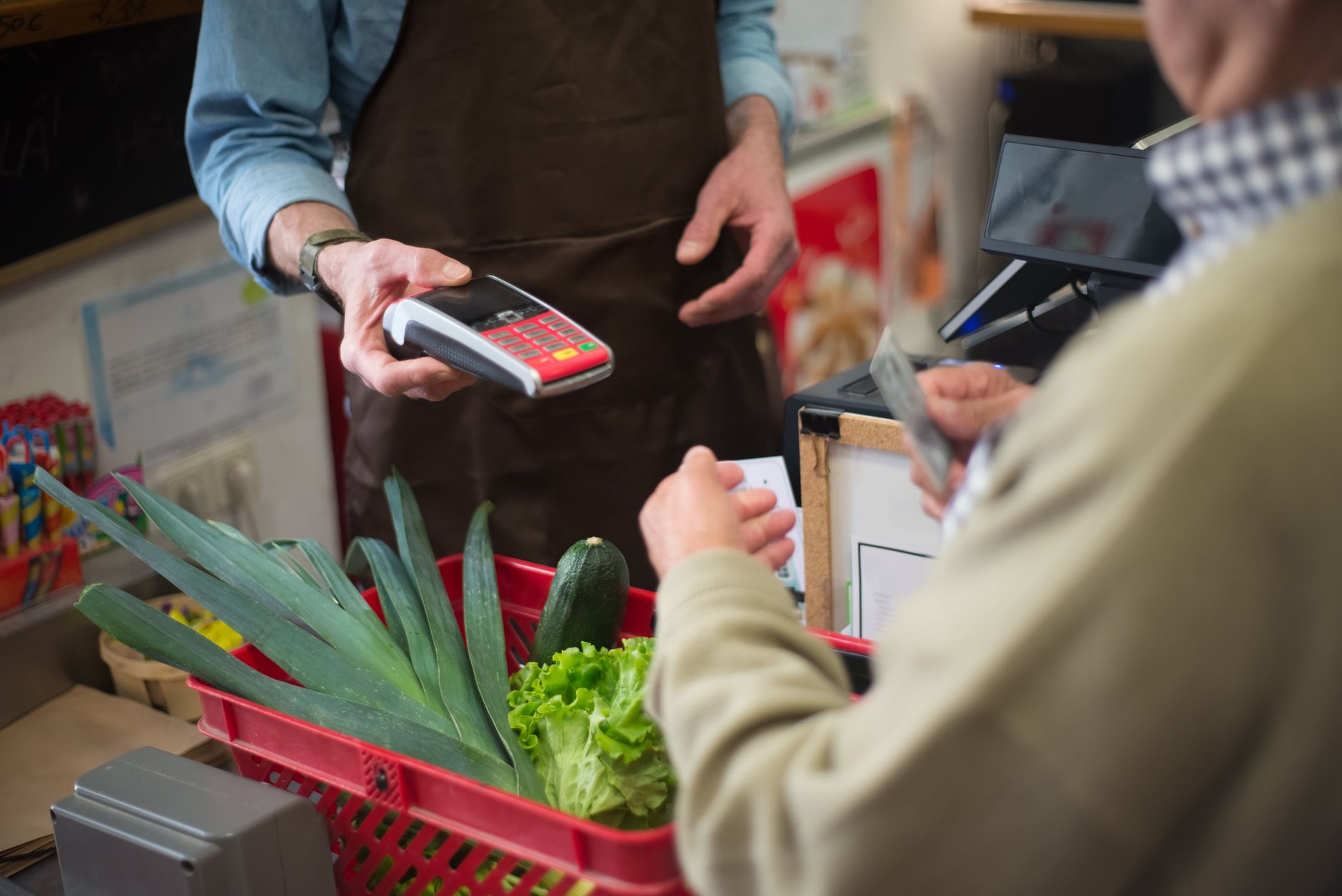
When a salesperson scans a product at the POS terminal, the transaction is immediately recorded in the ERP’s centralized database. This data automatically triggers a chain of processes: updating branch inventory, posting to accounting records, updating employee sales performance, and synchronizing the customer list. Managers at the headquarters can view real-time reports from all branches without waiting for daily reports.
- Salesperson scans product at POS: Transaction data (product code, selling price, quantity, customer) is recorded in the POS memory.
- Send data to the centralized ERP server: The POS terminal connects via API or VPN, sending transaction data to the main ERP database within 1-5 seconds.
- ERP processes and updates related modules: The system automatically updates inventory, posts to accounting records, updates sales performance, and customer history.
- Real-time reports for management: Managers at the headquarters view a dashboard with real-time data from all branches, without needing to wait for daily reports or manual data entry.
Why Vietnamese SMEs Need to Transition from Disparate Systems to Integrated ERP with POS

Disparate systems (separate POS + Excel + separate accounting) cause three core problems: (1) unsynchronized data, forcing managers to reconcile figures from 3-5 different sources; (2) high operational costs due to employees manually entering data, double-checking, and correcting errors; (3) slow decision-making speed, with managers not knowing the actual business situation until the next day or the day after. For Vietnamese SMEs expanding by 5-10 branches each year, these problems multiply exponentially.
- Reduced data errors: Data from POS is automatically updated into ERP, eliminating the need for employees to re-enter it, reducing errors from 15-25% down to 1-3%.
- Labor savings: Eliminates manual data entry work; managers can assign employees to value-added tasks (sales, customer service) instead of data entry.
- Faster decisions: Managers view real-time data, identifying issues (slow-moving stock, best-selling products, VIP customers) within minutes, without waiting for daily reports.
- Easier branch expansion: When opening a new branch, simply install POS and connect it to the central ERP, without needing to train staff on complex data entry procedures.
Comparison Table: Disparate Systems vs. Integrated ERP with POS

| Criteria | Disparate Systems (POS + Excel + Accounting) | Integrated ERP with POS |
|---|---|---|
| Data Synchronization | Manual entry, 1-3 day delay, 15-25% error rate | Automatic, real-time, error rate <3% |
| Required Manpower | 1-2 accounting staff + 1 IT staff for system management | 0.5 accounting staff + 0.5 IT (40-50% reduction) |
| Reporting Time | Daily or weekly (24-168 hour delay) | Real-time or hourly |
| Annual Software Cost | POS: 10-20M + Excel + Separate Accounting: 20-40M = 30-60M | Integrated ERP: 40-80M (includes POS) |
| Scalability | Difficult, requires training new processes for each branch | Easy, new branch only needs to connect POS to ERP |
Common Mistakes When Deploying Integrated ERP with POS
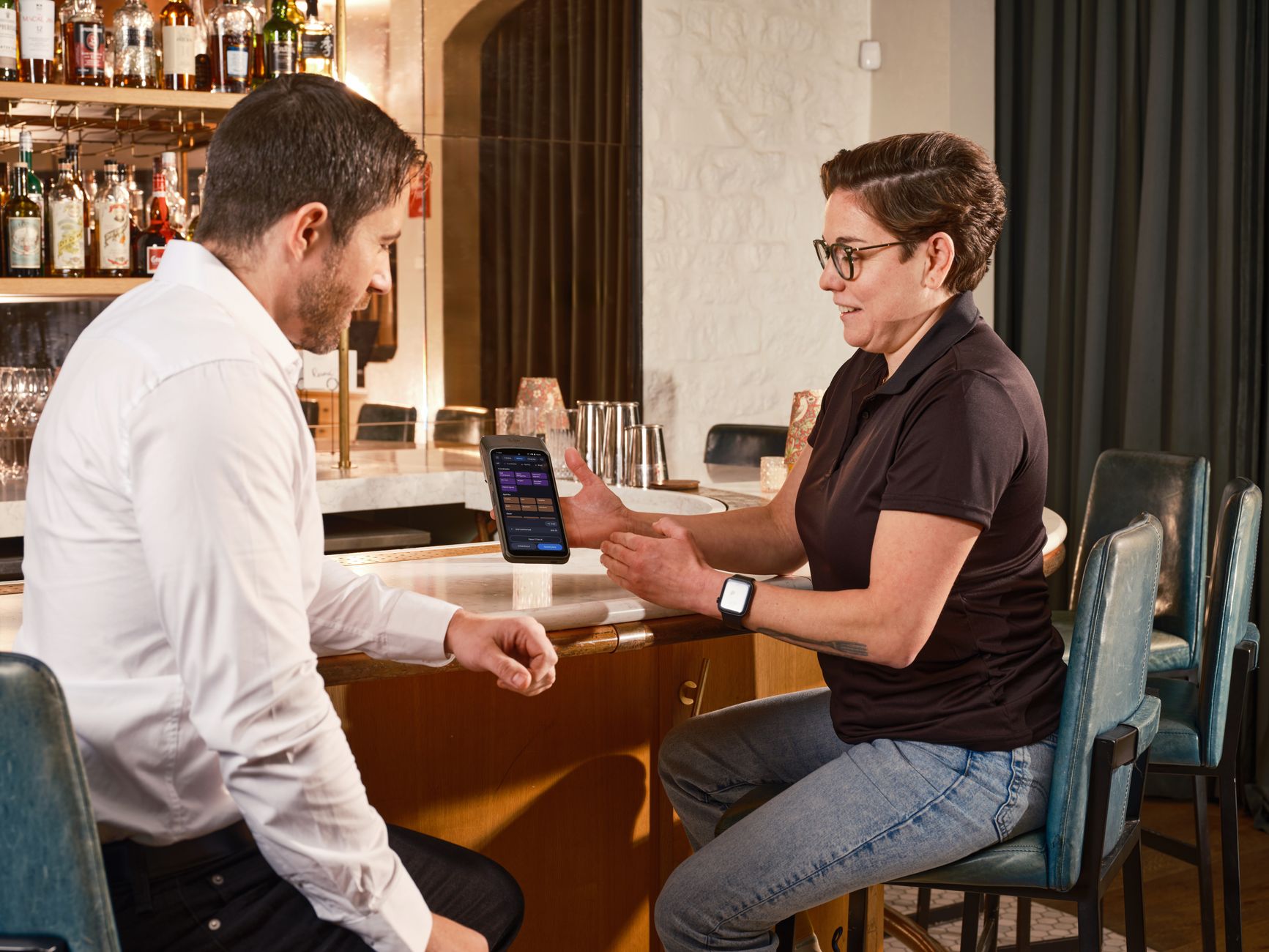
1. Choosing an ERP unsuitable for SME scale: Many businesses select enterprise-level ERPs (SAP, Oracle) to “scale up,” but deployment costs range from 500M-2B VND, take 6-12 months, and introduce unnecessary complexity. Instead, Vietnamese SMEs should choose cloud ERPs (Odoo, Netsuite, VietPOS Software) with costs of 40-150M VND/year and deployment in 1-3 months.
2. Not preparing legacy data before migration: If legacy data (customers, products, inventory) is dirty (duplicates, missing, wrong format), migrating it into the new ERP will cause cascade errors. Spend 2-4 weeks cleaning data before the transition.
3. Cutting off the old system completely immediately: Instead of a “big bang” (switching to the new ERP all at once), run the old and new systems in parallel for 2-4 weeks to verify data and processes. If issues arise, you can rollback quickly.
4. Not training employees adequately: An integrated ERP with POS changes workflows. If employees don’t understand how to use it, they will continue using old methods (separate notes, manual entry), negating efficiency. Allocate 1-2 weeks for training plus continuous support for the first 3 months.
5. Ignoring integration with other systems: An integrated ERP with POS is most powerful when connected to CRM (customer management), Accounting, HR, and Warehouse. If you only integrate POS but skip CRM or Warehouse, benefits will be reduced by 30-50%.
Deployment Roadmap for Integrated ERP with POS for Vietnamese SMEs 2026

Deploying an integrated ERP with POS is not a single step but a 3-6 month process including: (1) Preparation phase: selecting ERP, cleaning data, training employees (4-6 weeks); (2) Deployment phase: installing POS, integrating API, verifying data (4-6 weeks); (3) Stabilization phase: running old and new systems in parallel, supporting employees, optimizing processes (4-8 weeks).
During this phase, businesses should seek a deployment partner with experience in Vietnamese SMEs, not a large enterprise ERP consulting firm. A good partner will provide support from selecting the right ERP, preparing data, deployment, and training, to post-deployment support for 3-6 months.
Frequently Asked Questions about Integrated ERP with POS
FAQ
Q: Is an ERP integrated with POS suitable for businesses with 3-5 branches?
Yes. In fact, an ERP integrated with POS is most suitable for businesses with 3-20 branches. For 1-2 branches, management can control operations using Excel or a simple POS. However, from 3 branches onwards, synchronizing data from multiple points of sale becomes complex. An ERP integrated with POS will save 30-40% in operational costs and significantly reduce errors.
Q: How much does it cost to implement an ERP integrated with POS?
The cost consists of three parts: (1) ERP software: 40-150 million VND/year depending on scale (cloud-based is cheaper than on-premise); (2) Implementation and consulting: 20-50 million VND (one-time); (3) Hardware (POS machines, server, network): 10-30 million VND. Total for the first year: 70-230 million VND. After the first year, the annual cost is only software + support: 50-180 million VND/year. ROI is typically achieved within 12-18 months thanks to reduced manpower and errors.
Q: Should I choose cloud ERP or on-premise ERP?
For Vietnamese SMEs, cloud ERP (Odoo, Netsuite, VietPOS Software) is often the better choice because: (1) Costs are 30-50% lower than on-premise; (2) No need to invest in a dedicated server; (3) Automatic feature updates; (4) Supports access from multiple locations. On-premise is only necessary if the business has special security requirements or unstable internet connectivity.
Q: How long does it take to implement an ERP integrated with POS?
For Vietnamese SMEs with 5-10 branches, implementation time is typically 3-6 months: (1) Preparation (selecting ERP, data cleansing): 4-6 weeks; (2) Implementation (installation, integration, validation): 4-6 weeks; (3) Stabilization (parallel running, staff support): 4-8 weeks. This time can be shortened if the business has an experienced implementation partner or if the legacy data is already clean.
Q: Can an ERP integrated with POS integrate with other systems?
Yes. An ERP integrated with POS can connect to CRM (customer management), Accounting, HR, Automated Warehouse, and other systems via API or plugins. For example, when a customer makes a purchase at the POS, this information is automatically updated in the CRM, and if that customer is a VIP, the CRM will suggest related products to the sales staff. This integration capability is one of the key benefits of an ERP integrated with POS compared to disparate systems.
Are you considering implementing an ERP integrated with POS for your business? Việt Đức Trí Group provides comprehensive ERP integrated with POS solutions for Vietnamese SMEs, from selecting the right software, data preparation, implementation, to post-implementation support. Contact us today to discuss your business’s needs and implementation roadmap. Hotline: 0935 295 337 — We are ready to assist you.