
ERP Case Study: F&B Chain with 12 Branches from 5 Separate Software Systems Down to 1 Platform
Tân Phát restaurant chain (12 branches, 200+ employees) deploys VietPOS ERP, reducing operating costs by 35% and speeding up accounting closing from 5 days to 1 day. View real case study and lessons learned applicable to Vietnamese SMEs.

Integrated ERP system is a solution that unifies data from business departments (sales, warehouse, accounting, HR, CRM) into a single platform. In Vietnam, small/medium F&B and retail chains are gradually transitioning from a “5 separate software” model to an integrated ERP to optimize operational costs, accelerate processes, and improve multi-branch management efficiency.
Customer: Tan Phat restaurant chain | Industry: F&B (Restaurants) | Scale: 12 branches, 200+ employees | Location: Ho Chi Minh City, Hanoi, Da Nang
Customer Problem: Using 5 separate software causes operational chaos
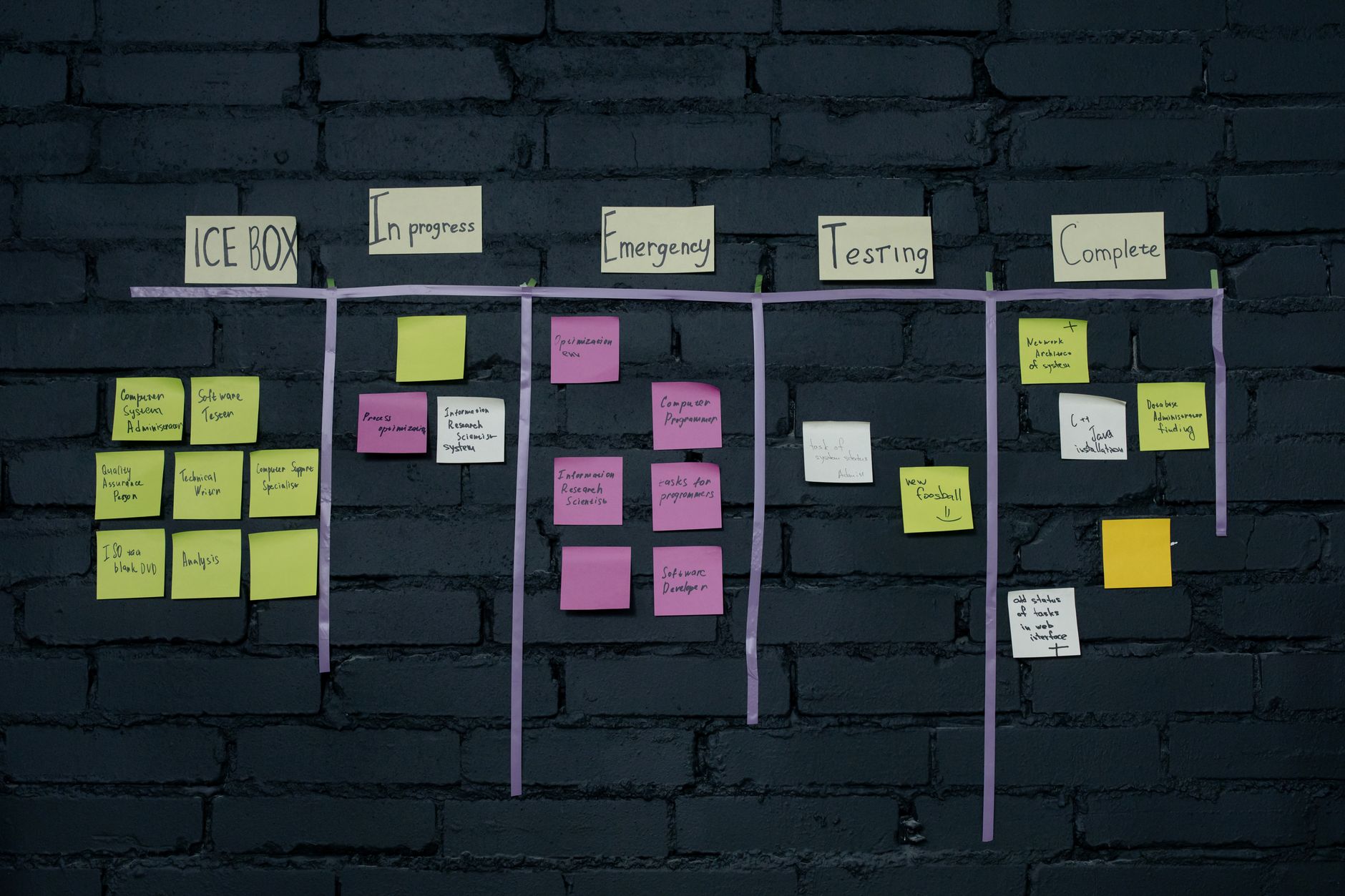
Before implementing ERP, Tan Phat managed its business with 5 independent software: POS at the counter (no real-time sync), separate accounting software (Excel + Misa), manual warehouse system (books + email), customer CRM (Google Sheet), and HR timekeeping (time clock + files). This model caused 3 main problems directly affecting profit and management.
- Data chaos, time-consuming reconciliation: POS revenue did not match accounting (2-3 day delay), inventory was not synchronized across 12 branches. Each month, accounting had to spend 40% of their time (about 60-80 hours) reconciling data between software, delaying closing by 5-7 days.
- High operational costs: Paid licenses for 5 separate software (~15 million VND/month), hired 2 additional employees just for data entry and cross-system data checking.
- No multi-branch management strategy: Headquarters management could not monitor the real-time business status of each branch. Purchasing and staffing decisions had to rely on manual reports, delayed by 2-3 days.
- Difficulty in quality control: No system to track loyal customers, wasted marketing costs (unable to identify high-value customers).
Deployed VietPOS ERP Solution: Integrating 5 Departments into 1 Platform

Tan Phat chose VietPOS ERP (a solution from VIET DUC TRI GROUP) for its deep integration of sales-inventory-accounting-HR-CRM, real-time multi-branch support, and ease of deployment for Vietnamese SMEs. The implementation process lasted 8 weeks with 5 main steps.
- Week 1-2: Survey current processes + Map old data. The VietPOS ERP team interviewed departments (sales, warehouse, accounting, HR) to understand processes, then created a data mapping diagram from 5 old software systems to the ERP. Historical data (3 years) was cleaned, duplicates removed, and formats standardized.
- Week 3-4: Configure ERP + Set up business rules. Configured modules for sales (integrated POS, promotions, loyalty), warehouse (automatic inventory, inter-branch goods allocation), accounting (automated bookkeeping from POS/warehouse), HR (automatic salary calculation from timekeeping), CRM (customer segmentation, email marketing). Set up automation rules: when POS records a sale, accounting automatically records revenue; when warehouse dispatches goods, inventory decreases immediately.
- Week 5-6: Training + Pilot test at 2 branches. Organized training sessions for 3 groups: sales counter (using new POS), warehouse (inventory management), accounting (automatic reports). Ran a pilot test at the 2 smallest branches (HCMC District 1 + Hanoi) for 1 week to detect errors and adjust configurations.
- Week 7-8: Rollout to all 12 branches + Go-live support. Deployed the ERP to all 12 branches over 2 days (weekend) to avoid business disruption. The VietPOS ERP team stayed for 1 week of onsite support to handle issues, delete test data, and ensure all branches ran stably.
One important factor: VietPOS ERP provides a RAG knowledge assistant system to help employees self-learn features, reducing training time by 30% compared to traditional ERP. Tan Phat also integrated the Sunmi V3 Max POS terminal (officially distributed by VietPOS) to ensure hardware-software connectivity without compatibility issues.
Results achieved after 3 months of implementation

After 3 months of using VietPOS ERP, Tân Phát recorded clear improvements in costs, speed, and management efficiency. The figures below have been confirmed by the chief accountant and the branch director.
| Metric | Before ERP | After ERP (3 months) | Improvement |
|---|---|---|---|
| Operating cost/month | 15 million (5 licenses + 2 reconciliation staff) | 9.8 million (1 ERP license + 0.5 support staff) | ↓ 35% (-5.2 million) |
| Time to close accounting books | 5-7 days | 1 day | ↓ 85% (-4 days) |
| Revenue data accuracy (match between POS and accounting) | 87% (requires manual reconciliation) | 99.8% (automatic real-time) | ↑ 12.8 percentage points |
| Warehouse coordination time between branches | 2-3 days (email + phone calls) | 2-4 hours (real-time inventory search, automatic transfer order creation) | ↓ 95% (from days to hours) |
“Before, every evening I had to sit and check POS revenue against the accounting books, wait for reports from 12 branches, and only the next morning would I know the previous day’s business situation. Now I open the VietPOS ERP dashboard at 8 AM and immediately see the revenue, inventory, personnel, and profit of each branch. Purchasing decisions and personnel coordination are faster and more accurate. Especially, the accounting staff no longer have to sit and enter data repeatedly — everything is automatic from the POS.”
— Mr. Nguyễn Văn Minh, CEO of Tân Phát Restaurant Chain
Impact on Profit and Personnel Productivity

In addition to direct cost savings, VietPOS ERP brings indirect impacts on profit and productivity. With realtime data, Tân Phát can optimize selling prices, manage loyal customers, and coordinate personnel more effectively.
- Revenue increase from CRM + Loyalty: With centralized customer data, Tân Phát identified 15% of high-value customers (spending over 5 million/month), focusing marketing on this group. Result: revenue from the loyal customer group increased by 22% in 3 months.
- Reduced inventory waste: Previously, each branch purchased goods independently without knowing whether other branches had stock, causing 8-12% inventory waste. With ERP, Tân Phát optimized inter-branch goods coordination, reducing inventory to 3-4%.
- Increased accounting personnel productivity: Accounting staff no longer need to manually enter data, allowing them to focus on financial analysis, planning, and strategic consulting for management. Productivity, measured by “high-quality financial reports/month,” increased from 2 to 8 reports.
Lessons learned: Applicable to other Vietnamese F&B/retail businesses

From the Tân Phát case study, there are 4 important lessons for Vietnamese SME businesses considering an integrated ERP deployment. These lessons are not only about technology but also about strategy, people, and process change.
- Choose an ERP with experience in Vietnamese SMEs, not a global solution: Global ERPs (SAP, Oracle) are designed for large enterprises, with complex configurations, 6-12 month deployments, and costs of 500 million VND+. VietPOS ERP is designed specifically for Vietnamese F&B/retail, with fast deployment (6-8 weeks) and moderate costs (5-10 million VND/month). Choosing the right solution is the key to success.
- Prepare legacy data thoroughly before migration: Tân Phát spent 2 weeks cleaning historical data (removing duplicates, standardizing formats). If this step is skipped, mixed data will cause errors in financial reports, which are difficult to fix later. Investing in data cleanup is an investment in long-term ERP quality.
- Employee training is not “one-time teaching”, but “continuous teaching”: Tân Phát not only provided direct training but also established post-go-live support processes (weekly check-ins, FAQs, instructional videos, RAG chatbot). Employees need 3-6 months to get used to the ERP, not 3 days. Continuous support enables better practical application.
- Start with 1-2 pilot branches, do not roll out everywhere immediately: Tân Phát ran a trial at 2 branches first, identified and fixed configuration errors, then deployed to all 12 branches. This approach reduces the risk of go-live failure, minimizes business downtime, and increases employee trust in the ERP.
Integrating VietPOS ERP with other solutions from Việt Đức Trí Group

One advantage of VietPOS ERP is its ability to integrate with other solutions in the Việt Đức Trí Group ecosystem. Tân Phát is currently preparing to expand from 12 to 25 branches in the next 18 months and is considering VietPOS Software hỗ trợ chuỗi nhà hàng mở rộng to manage a larger scale.
Additionally, Tân Phát plans to deploy camera AI phân tích hành vi khách hàng (by An Ninh Số — a member of Việt Đức Trí Group) at its branches to monitor traffic, analyze shopping behavior, and optimize store layout. Data from the AI cameras will be connected to VietPOS ERP to create a comprehensive management and analysis system.
Frequently Asked Questions
1. Does ERP actually save costs compared to using 5 separate software programs?
Yes. According to the Tân Phát case study, implementing ERP reduced operating costs by 35% (from 15 million to 9.8 million VND/month) thanks to 3 factors: (1) Reducing the number of licenses from 5 to 1, (2) Reducing data reconciliation staff (because ERP automates this), (3) Reducing inventory waste through centralized warehouse management. However, ROI depends on the scale of the business (the larger the business, the greater the savings) and the initial implementation cost (typically 50-200 million VND depending on complexity).
2. How long does ERP implementation take and does it affect daily business operations?
Tân Phát took 8 weeks from survey to go-live, and an additional 2 weeks for full stabilization. To minimize downtime risk, Tân Phát implemented over two weekends (avoiding peak business hours), and had the VietPOS ERP team provide onsite support for one week. Business disruption was minimal (under 4 hours), and employees could continue selling using the old POS if the ERP encountered issues.
3. Will employees easily adapt to the new ERP or will they resist?
Initially, employees (especially accountants and warehouse staff) resisted because they were accustomed to the old processes. Tân Phát addressed this by: (1) Providing thorough training before go-live, (2) Running a pilot at 2 branches so employees could see the benefits first, (3) Offering continuous support after go-live (weekly check-ins, FAQ, videos), (4) Using a RAG chatbot for employee self-learning. After 4-6 weeks, most employees found that ERP made their work easier (less data entry, automatic reports) and accepted it.
4. Is ERP suitable for small businesses (under 5 branches)?
Yes, but it requires careful consideration. Businesses with 1-2 branches and annual revenue under 10 billion VND can use POS + separate accounting software without needing a full ERP (lower cost, simpler). However, if the business plans to expand (3+ branches within the next 2 years), implementing ERP early will reduce future data migration costs. VietPOS ERP offers flexible pricing packages for small businesses (3-5 million VND/month), suitable for SME budgets.
5. After ERP implementation, is continuous support from the provider needed?
Yes. Tân Phát signed a long-term support contract with VietPOS ERP (including: monthly software updates, 24/7 technical support, additional training for new employees). Support costs are typically 10-15% of the license value per year. Continuous support helps the ERP operate stably, updates new features, and prevents security errors.
Conclusion: Integrated ERP is a Strategic Step for Vietnamese SMEs
The Tân Phát case study demonstrates that transitioning from “5 separate software systems” to “1 integrated ERP platform” not only saves costs but also unlocks strategic management opportunities (realtime analytics, CRM, purchase planning). With proper implementation, ERP can deliver a positive ROI within 6-12 months, along with long-term value during business expansion.
If your business is currently using 3+ separate software systems, or plans to expand branches within the next 18 months, now is the time to consider ERP implementation. A detailed article on integrated ERP with POS for Vietnamese SMEs provides further technical information and comparisons of different solutions.
Want to learn more about VietPOS ERP and how to implement it similarly to the Tân Phát case study? Contact Việt Đức Trí Group today for a free consultation, demo registration, and a customized ROI report for your business. Hotline: 0935 295 337 | Email: [email protected]