
AS/RS Logistics ROI: 12 Months of Practical Implementation
Case study of a logistics customer in Binh Duong: from 2,400 pallets/day to 4,100 pallets/day, saving 35% in labor costs, payback 18 months. Detailed analysis of ROI, break-even time, and 5 key factors for successful AS/RS implementation.
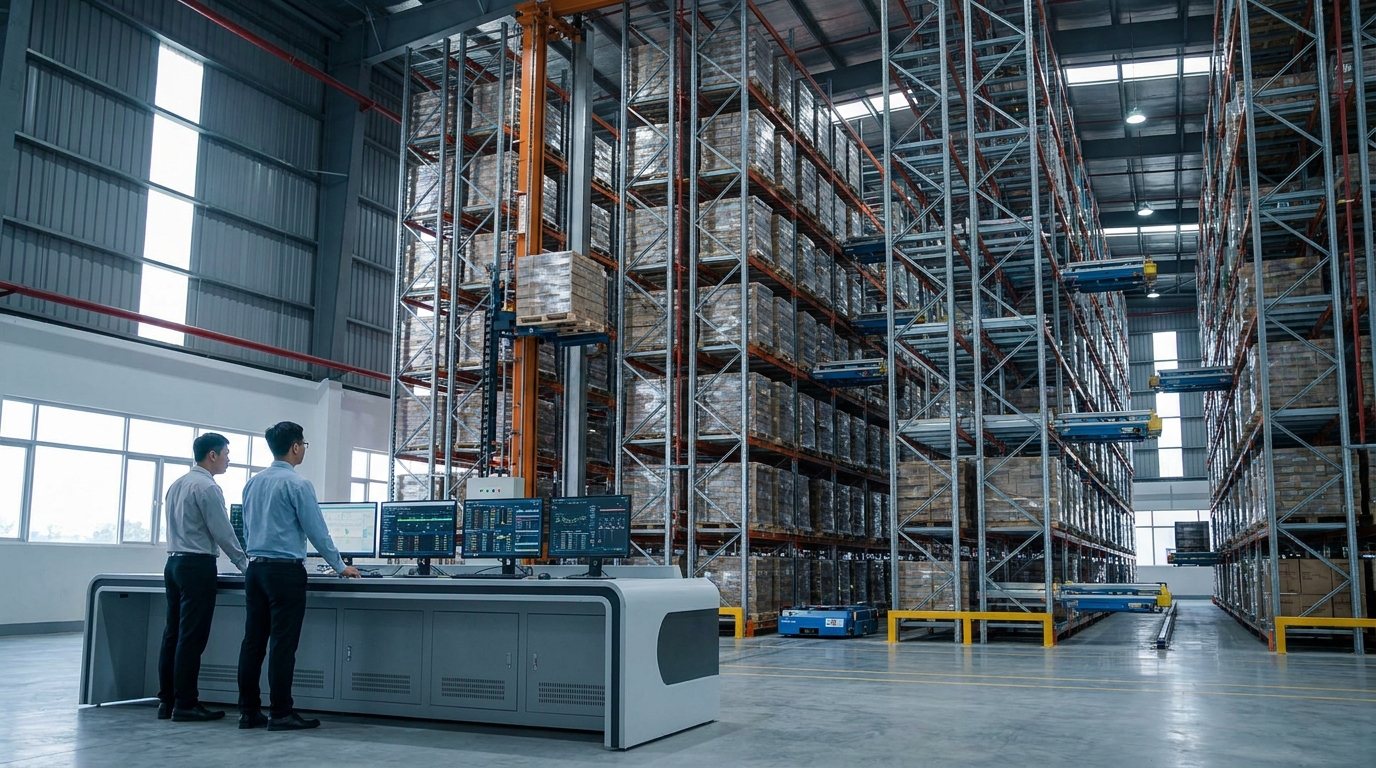
AS/RS (Automated Storage & Retrieval System) is an automated warehouse solution integrating intelligent racking systems with shuttle robots or cranes, enabling goods handling without manual intervention. In Vietnam, logistics and manufacturing companies are seeking to optimize warehouse operating costs — and ROI from AS/RS is often perceived as “too far-fetched” or “only for large enterprises.” This case study is different: we analyze real data from a mid-sized logistics customer 12 months after implementation, including payback time, hidden costs, and 5 key success factors.
Customer: Logistics Binh Duong (alias) | Industry: 3PL Logistics | Scale: 8,000m² warehouse, 45 employees | Location: Binh Duong, Vietnam
Customer Challenges Before Implementation
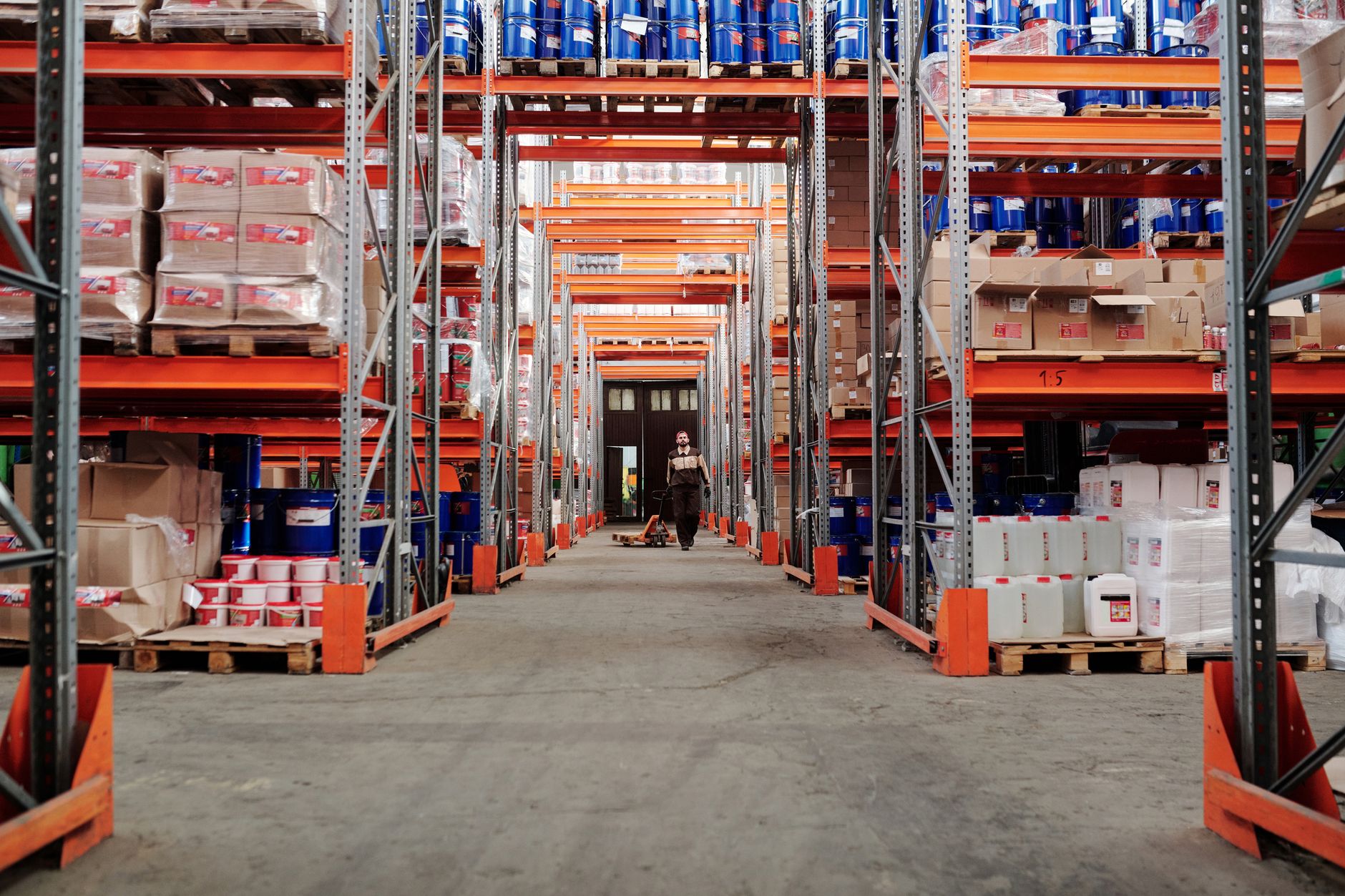
Customer Logistics Binh Duong faced 4 urgent challenges: (1) Warehouse productivity reached only 2,400 pallets/day with 45 employees, while customer demand increased 50% annually; (2) Labor costs accounted for 42% of total operating costs, and recruiting general workers in Binh Duong became increasingly difficult; (3) Inventory errors of 3-5% per quarter, causing losses and customer complaints; (4) Low warehouse space utilization — only 60% of building height used due to pallet jack limitations.
- Warehouse productivity: 2,400 pallets/day, 53 pallets/employee/day
- Labor costs: 42% of total opex, increasing 8% YoY due to wage inflation
- Inventory accuracy: 96-97% (industry target 99.5%)
- Space optimization: 60% height utilization, losing 3,200m² potential
AS/RS Solution Implemented by VIET DUC TRI GROUP
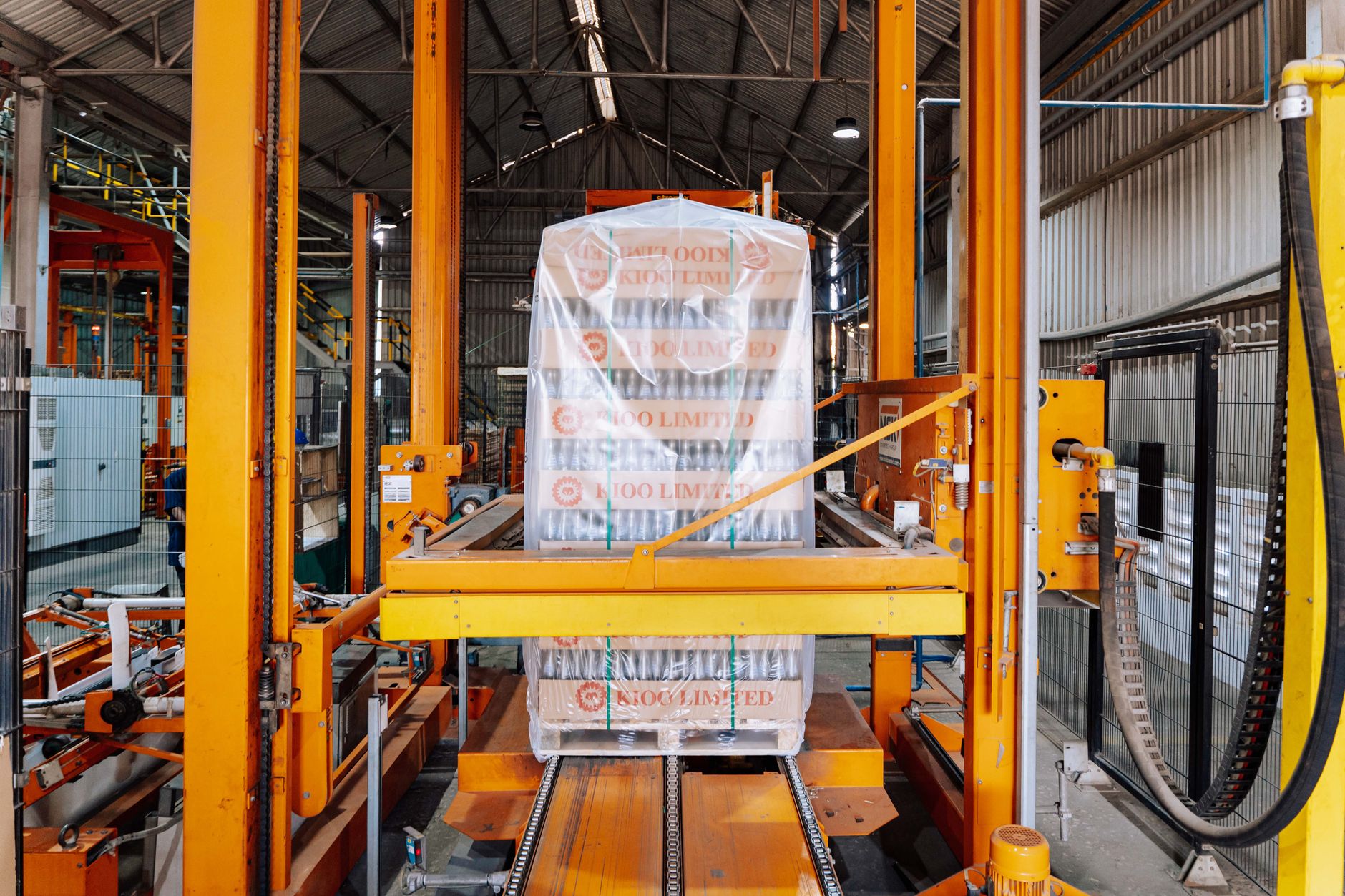
VIET DUC TRI GROUP — through its VietPOS Rack division — proposed a hybrid AS/RS system: 1 automated stacker crane handling 2 main warehouse aisles, 6 shuttle robots handling high-frequency areas. The system was integrated with the customer’s warehouse management software (WMS), enabling automatic pickup/putaway without employees entering positions above 6m. Implementation was divided into 3 phases: 4 weeks design + installation, 2 weeks testing & training, 2 weeks stabilization.
Step 1: System design and detailed site survey
- Analysis of current goods flow: 15 product categories, 3 pallet types (EU, US, custom)
- Target throughput simulation: 4,200-4,500 pallets/day based on customer peak demand
- Racking layout design: 2 AS/RS towers, each 24m high, 180 positions/tower = 360 total positions (300% increase vs. manual racking)
- Selected Stacker Crane (speed 60m/min) for main aisles, shuttle robots (speed 40m/min) for secondary aisles
Step 2: Hardware Installation and Software Integration
- Import & install 1 Stacker Crane from a European supplier (Daifuku or Kardex), 6 shuttle robots from Sunmi/Hikvision
- Renovate electrical infrastructure: upgrade 3-phase cable from 63A to 125A, install 30kVA UPS
- Integrate WMS with the AS/RS system via API: customers do not need to change old software, only need an automatic communication module
- Calibrate RFID sensors and barcode scanners at input/output points
Step 3: Training & Stabilization
- Train 12 operational staff (operator + supervisor + technician)
- Run parallel for 2 weeks: run manual operations alongside AS/RS to verify data
- Adjust speed parameters and picking accuracy based on real-time data
Results Achieved After 12 Months of Deployment
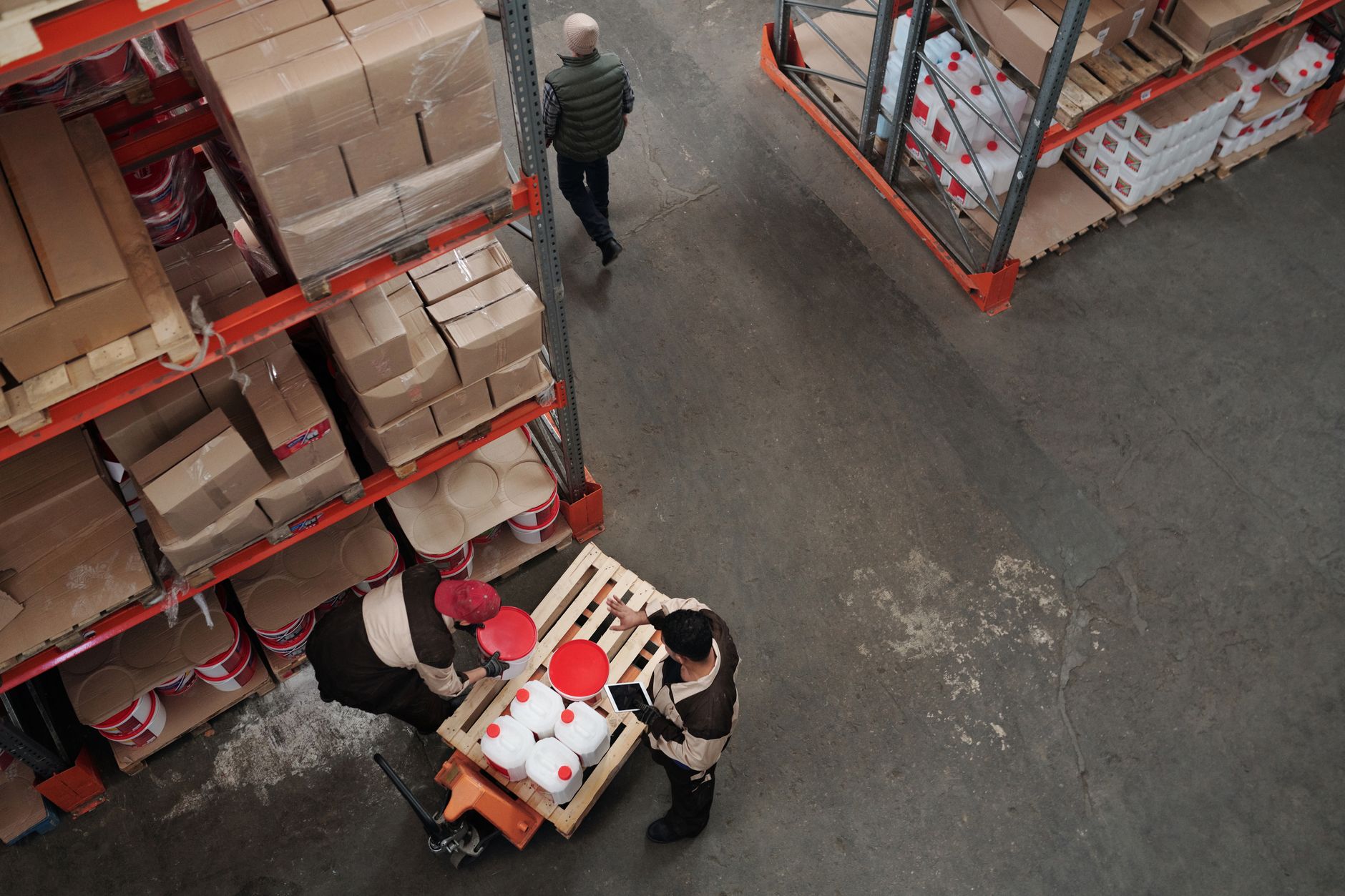
Warehouse productivity: from 2,400 → 4,100 pallets/day (+70%)
Labor cost: reduced from 42% → 27% of total opex (saving 35% headcount)
Inventory accuracy: from 96% → 99.8% (error < 0.2%)
Space optimization: from 60% → 95% height utilization, increasing capacity by 280%
| Metric | Before AS/RS | After 12 months | Change |
|---|---|---|---|
| Throughput (pallets/day) | 2,400 | 4,100 | +70% |
| Warehouse staff | 45 | 29 | -35% (16 employees) |
| Labor cost/pallet | $2.80 | $1.48 | -47% |
| Inventory accuracy | 96% | 99.8% | +3.8% |
| Picking time/order | 12 minutes | 3.2 minutes | -73% |
Detailed ROI Analysis: When is break-even?

Total implementation cost (CapEx): $485,000 USD, including Stacker Crane ($280,000), 6 shuttle robots ($120,000), racking ($55,000), electrical infrastructure ($18,000), integration software ($12,000). Annual benefits (OpEx savings + revenue uplift): Year 1 = $268,000 (mainly labor savings + increased throughput), Years 2-3 = $310,000/year (stable). Payback period: 18 months. 5-year NPV (discount 10%): $680,000.
- Labor savings: 16 employees × $8,400/year (salary + allowances) = $134,400/year
- Reduced inventory errors: From 3% → 0.2% error rate = savings of $45,000/year (avoiding goods loss)
- Increased revenue: Processing an additional 1,700 pallets/day × $18 margin/pallet × 250 working days = $76,500/year
- Space optimization: Freeing up 3,200m² available for lease = $12,100/year (price $3.75/m²/year in Binh Duong)
Customer Testimonials
“We were initially concerned that the cost of $485,000 was too high, but after 12 months, the ROI was clear. Productivity increased by 70%, labor costs nearly halved, and most importantly, inventory accuracy is nearly 100% — something manual racking could never achieve. At the current pace, we will break even in 18 months, after which it’s all profit.”
— Nguyễn Văn Tuấn, Operations Director, Logistics Bình Dương
5 Key Factors Determining AS/RS ROI Success
Not every business deploying AS/RS achieves ROI like this case. There are 5 critical factors: (1) Minimum throughput scale of 3,000+ pallets/day — below this number, fixed costs are too high; (2) Consistency of goods flow — if products are too diverse or irregular, the system cannot be optimized; (3) IT/technical team capable of maintenance — AS/RS is not “plug & play”, it requires periodic maintenance; (4) Capital capacity to withstand 2-4 weeks of deployment downtime; (5) Warehouse height ≥ 6m — if the warehouse is low, the space optimization benefits decrease significantly.
- Minimum Throughput: 3,000-5,000 pallets/day to cover fixed costs
- Flow Stability: 80%+ of products should have stable SKUs (not changing too rapidly)
- Maintenance Capability: Need 1-2 specialized technicians or a maintenance contract with the supplier
- Warehouse Height: Minimum 6-7m to optimize space; if < 5m, ROI will extend by 12+ months
- Software Integration: Current WMS must have API capability — otherwise, integration costs will increase by 30-50%
When Should Vietnamese Logistics Businesses Consider AS/RS?
AS/RS is not a “one-size-fits-all” solution — it is most suitable for 3PL logistics businesses with a scale of 5,000-15,000m², handling 3,000+ pallets/day, with stable goods flow (e.g., e-commerce fulfillment, FMCG distribution, automotive parts). If a business only handles < 1,500 pallets/day, shuttle racking or drive-in racking would be more cost-effective. If products are too diverse or frequently change (e.g., watch or clothing retail warehouses), AS/RS will face difficulties in layout optimization.
Frequently Asked Questions
Is an 18-month payback period typical for AS/RS?
Not entirely. Payback depends on 3 main factors: (1) Throughput scale — if < 2,500 pallets/day, payback can extend to 24-30 months; (2) Local labor costs — in Ho Chi Minh City/Hanoi, labor costs are higher, so payback is faster; (3) Level of space optimization — if the warehouse is tall, space benefits are greater, and payback will be quicker. This case achieving 18 months is good, but a reasonable target for medium enterprises is 20-24 months.
How long does AS/RS require downtime during implementation?
Downtime is typically 2-4 weeks depending on scale. Weeks 1-2: hardware installation (racking, crane, shuttle), customers can still run manual areas in parallel. Week 3: software integration + testing. Week 4: parallel run (both manual and AS/RS). To reduce downtime, some businesses choose phased implementation (Phase 1 = 1 AS/RS tower, Phase 2 = second tower after 6 months), but this will extend the ROI timeline.
What is the annual maintenance cost for AS/RS?
It is usually 5-8% of the CapEx value per year. With a CapEx of $485,000, maintenance will be $24,000-$38,000/year. This includes: (1) Periodic Stacker Crane maintenance ($12,000-$16,000/year), (2) Shuttle component replacement ($6,000-$10,000/year), (3) Software & support ($6,000-$12,000/year). If signing a comprehensive maintenance contract with the supplier, costs will be higher but the risk of downtime will be lower.
If a business is not ready to spend $485,000 immediately, are there other solutions?
There are 2 intermediate solutions: (1) Shuttle racking hybrid — using automatic pallet shuttles (cost $150,000-$250,000) without a crane, achieving 80% of AS/RS throughput but with a faster ROI of 6-9 months. (2) Leasing/BOT — some suppliers (e.g., VietPOS Rack) offer a BOT (Build-Operate-Transfer) model over approximately 7-10 years, where customers only pay monthly instead of a large CapEx. These two solutions are more suitable for medium-sized enterprises or logistics startups.
How to assess whether AS/RS is suitable for your business?
Before deciding, follow 3 steps: (1) Audit current throughput — if < 2,000 pallets/day, AS/RS is not yet necessary; (2) Analyze labor costs — calculate total salary + allowances + insurance, if < 30% of opex, ROI will be slow; (3) Check warehouse height — if < 6m, space benefits will be limited. Then, contact a supplier (e.g., VietPOS Rack) to conduct a detailed feasibility study, including 3D simulation, ROI calculator, and accurate cost estimation.
Do you want to assess whether AS/RS is suitable for your warehouse? Việt Đức Trí Group provides free feasibility study services for logistics enterprises with a scale of 5,000-20,000m². Contact us now for detailed consultation on ROI, payback period, and solutions that fit your budget. Hotline: 0935 295 337 (support 8am-6pm, Monday-Friday).